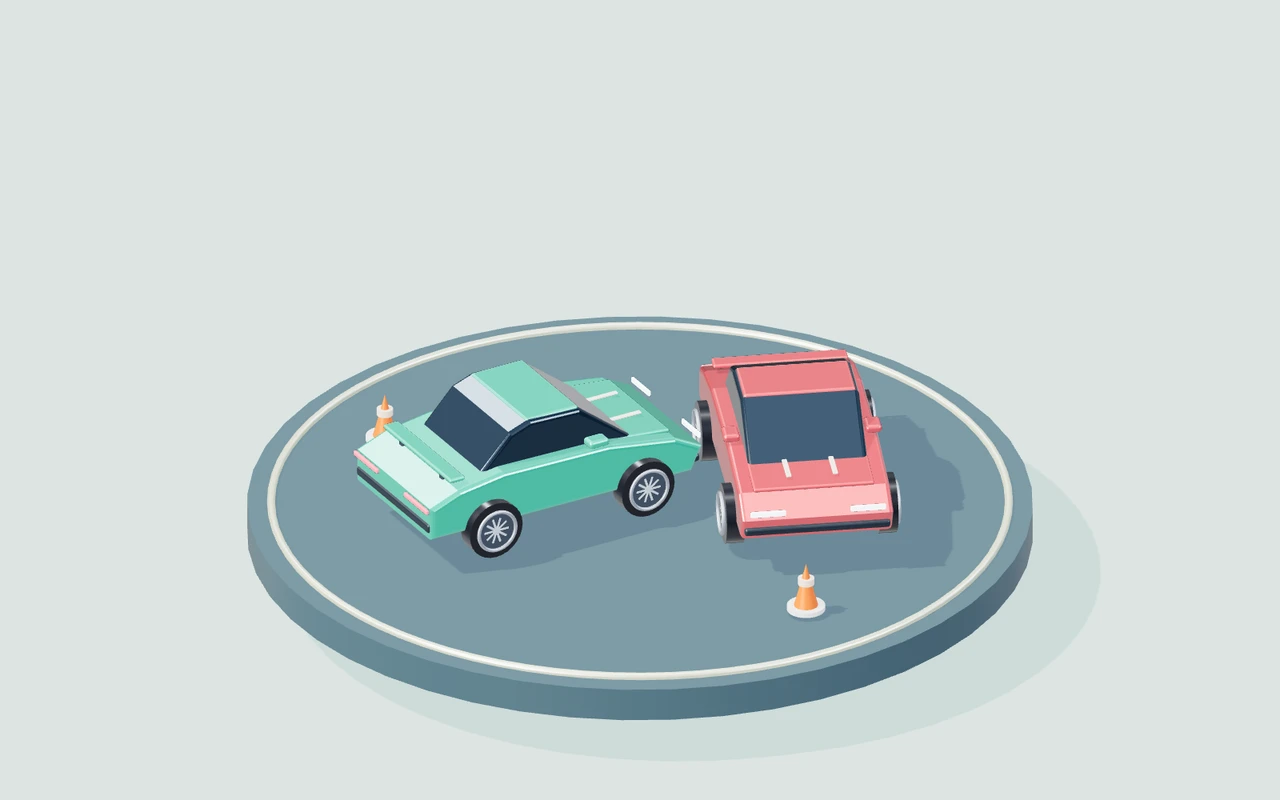
Arena Knockout makes a car collision part of the objective, but that does not make every collision useful. A rival near an edge can still leave your own vehicle badly positioned if you approach without an exit. The game’s physical contacts produce movement and rebounds, so a promising impact needs enough supported space for the player afterward. This article focuses on position before and after contact: read the rival, choose a useful direction and avoid turning an attempted ring-out into a fall of your own. The aim is a deliberate opportunity, not a guarantee that one large hit will always decide the encounter.
Read the edge relationship: Position gives contact a purpose
Before driving toward a rival, compare both vehicles with the nearby roof edges. A contact that moves the opponent toward open supported space may create little progress, while a different approach could make an edge relevant. Your own distance from that edge matters just as much.
Choose opportunities that leave the player a readable path afterward. You do not need to predict the exact physical result of a collision; you need a reason for the approach beyond seeing another car nearby. An opponent’s position, the direction of your movement and the available supported area create that reason. If all three look poor, reposition rather than accelerate into an unclear meeting. The arena is about physical ring-outs, so success depends on where the vehicles end up, not merely on how dramatic the impact appears in the camera.
Choose a manageable approach: Speed should follow the plan
A faster approach adds urgency to both contact and recovery. If you have not identified where the player should remain after the impact, additional speed can make the result harder to read. Learn a useful line at a manageable pace before adding a burst for a specific opportunity.
Watch the opponent’s movement rather than aiming at a location it occupied earlier. The rivals pursue the player, so the relationship can change as you approach. A measured entry gives you time to recognise whether the encounter still fits the plan. This is not a reason to avoid all assertive contacts. It is a reason to connect momentum with direction and available roof space. A large acceleration toward an edge is a poor default answer when the main unresolved question is where your own car will travel afterward.
Prepare a supported exit: An impact has a second decision
The moment of contact can pull attention away from the player’s path. Once a rival moves, read where your own vehicle is heading and reduce the inputs that would keep it travelling toward danger. A promising hit does not make the roof wider or stop the car automatically.
Leave room to settle, turn or move back toward a useful central area. If the rival remains on the roof, that supported exit gives you another chance to choose an approach. If it falls, the exit keeps the progress from being followed by your own failure. Do not judge an attempt solely by whether the opposing car moved. A contact that preserves the player’s ability to make another deliberate decision is more useful than a spectacular collision which leaves no readable recovery line.
Use progress without rushing: The next rival is a new problem
A recorded ring-out reduces the remaining objective, but it does not solve the positions of the other vehicles. Read the progress display and the nearby opponents before beginning the next encounter. Repeatedly using the same approach can become less useful as the arena changes.
Checkpoint recovery preserves completed objectives in the current run and gives surviving rivals a safer opening. Use the paused moment to choose a better position rather than treating it as a reason to repeat the last dangerous collision. A fresh run restores the original mission if you want to practise the opening. The physical game does not promise identical outcomes from every contact, so compare the preparation and exit as well as the result. Useful tactics create room for another opportunity when the first one does not finish the opponent.
A strong hit also carries the player toward the edge
You approach a rival close to a roof boundary and produce a dramatic impact. The opponent moves, but your own car continues in the same dangerous direction with little supported space available for a recovery decision. Repeat with an exit in mind before contact. Choose a line that leaves the player usable roof space afterward, and use a manageable approach while learning how that encounter changes both vehicles’ positions.
Watch the player’s heading immediately after impact, not only the rival. A useful contact leaves enough room to settle or reposition whether or not the opposing car completes a ring-out. Keep the approach that preserves that room. Add more speed only when the direction and supported exit are understandable, rather than using a harder hit to compensate for poor positioning beside the edge.
The rival moves into the roof instead of out of it
Your car meets an opponent near a boundary, but the direction of contact sends it toward the supported middle. The impact is visible and energetic, yet the ring-out counter remains unchanged. Reposition and read the relationship between the opponent and the edge. Choose an approach with a useful direction while keeping the player’s own exit supported. Do not judge the opportunity only by how close the rival appears to danger.
Notice where both cars finish the meeting. A successful direction should make the boundary relevant without making the player’s own path an immediate fall risk. The counter is the confirmation of completed progress. If the opponent remains supported, use the exit to prepare another encounter. Keep physical movement separate from recorded completion; a visible push is evidence about the contact, not automatically a finished objective.
Several pursuing cars make a direct approach unclear
You turn toward one rival while others close in from different directions. The intended contact changes before you reach it, and the resulting collision leaves the car facing an unexpected part of the roof. Create more space before choosing the encounter. Move toward a supported area with a readable outgoing path, then identify the opponent and edge relationship that offers the clearest opportunity.
Watch whether the selected approach remains understandable as the rivals move. A useful tactic should leave room to change the plan rather than require you to drive through every nearby car simultaneously. If the positions become unclear again, prioritise a supported exit and reassess. The objective is to produce completed ring-outs while remaining able to play, not to accept any collision simply because several targets are available.
Progress creates an overconfident final chase
After several ring-outs, you see a remaining rival near the boundary and immediately use a large burst. The opening feels like an easy finish, but you have not checked your own line after the expected impact. Use the same positioning routine that produced earlier useful encounters. Read the rival, boundary and supported exit before committing. Keep the approach manageable until the line gives the extra momentum a clear purpose.
Observe whether the final encounter preserves the player’s roof space. A smaller remaining objective does not remove the need to control your own vehicle after contact. If the rival remains, keep the safe position and choose another opportunity. Completed progress is already useful; do not spend the remaining lives trying to turn one unclear impact into an instant dramatic finish.
Keep the experiment useful: Controls, recovery and setup
Before trying the exercise, confirm the current mission in Arena Knockout: Knock five rival cars off the rooftop arena while staying on it yourself. The player’s controls table is the reference for the actual actions available. W / ↑ means accelerate. S / ↓ means brake; keep holding to reverse. A / D means steer. Start and focus the canvas before using the keyboard. On a phone, use the labelled touch actions under the scene. Change one input at a time while learning the response; unfamiliar finger placement can otherwise look like an unexplained change in the game’s handling.
Difficulty and Graphics answer different questions. Low creates a calmer learning condition by changing the relevant mission settings; Medium removes some assistance; High uses the base challenge. Changing difficulty begins a fresh run, so choose it before comparing attempts. Graphics changes the rendered scene: Low reduces resolution and disables sunlight shadows, Medium adds shadows, and High increases sharpness, shadow detail and material reflections. A clearer picture can help you read the scene, but it does not replace the movement decision described in this article. Keep difficulty fixed while testing a technique.
Three lives give a run room to continue after detected failure. Read the reason on the Continue panel and choose one correction before recovering. Continue restores a safe position while completed mission objectives remain where the mode supports them. Reset vehicle can recover an awkward position without refreshing the page or spending a life. Recovery does not mean a completely fresh mission: choose Start a new run when you want the original opening. A paused panel stops the active simulation, and a voluntary reset adds no time penalty.
Use the pause control if you need to read, change hand position or look away. Sound and background music have separate controls and begin after an interaction; they are optional feedback rather than prerequisites for understanding the visible target. Fullscreen gives the scene more room, with an expanded-player fallback where the native API is unavailable. If your experiment is about steering or timing, keep the browser, input arrangement and graphics profile consistent. A score from one isolated attempt tells you less than a decision that leaves the vehicle well positioned in several attempts.
Decisions at a glance
| Situation | Useful action | Evidence to watch |
|---|---|---|
| A strong hit also carries the player toward the edge | Repeat with an exit in mind before contact. Choose a line that leaves the player usable roof space afterward, and use a manageable approach while learning how that encounter changes both vehicles’ positions. | Watch the player’s heading immediately after impact, not only the rival. A useful contact leaves enough room to settle or reposition whether or not the opposing car completes a ring-out. |
| The rival moves into the roof instead of out of it | Reposition and read the relationship between the opponent and the edge. Choose an approach with a useful direction while keeping the player’s own exit supported. Do not judge the opportunity only by how close the rival appears to danger. | Notice where both cars finish the meeting. A successful direction should make the boundary relevant without making the player’s own path an immediate fall risk. The counter is the confirmation of completed progress. |
| Several pursuing cars make a direct approach unclear | Create more space before choosing the encounter. Move toward a supported area with a readable outgoing path, then identify the opponent and edge relationship that offers the clearest opportunity. | Watch whether the selected approach remains understandable as the rivals move. A useful tactic should leave room to change the plan rather than require you to drive through every nearby car simultaneously. |
| Progress creates an overconfident final chase | Use the same positioning routine that produced earlier useful encounters. Read the rival, boundary and supported exit before committing. Keep the approach manageable until the line gives the extra momentum a clear purpose. | Observe whether the final encounter preserves the player’s roof space. A smaller remaining objective does not remove the need to control your own vehicle after contact. |
YOUR NEXT SESSION
Put it into practice
Choose one opponent and identify the nearby edge, the direction a useful contact would create and the supported area you want for the player afterward. Make a manageable approach and observe both vehicles after impact. On the next opportunity, change the approach line before changing speed. Compare whether the player has more room to settle, even if the rival remains supported. Use progress and recovery to keep the experiment small. End with one positioning decision you can repeat rather than a claim that a particular collision always guarantees a ring-out.
Play Arena KnockoutFrequently asked questions
Does every collision count as progress?+
No. The objective is recorded ring-outs, not a count of visible contacts. A rival can move dramatically and remain supported. Read the progress display and use the resulting positions to prepare another opportunity while keeping the player safely on the roof.
Should I use the strongest possible approach near an edge?+
Only use additional momentum when its direction and your supported exit are understandable. A stronger contact can also carry the player toward danger. Learn a useful approach at a manageable pace, then add speed for a specific position instead of making it the default response.
What should I inspect after a collision?+
Read your own car’s heading and remaining roof space, then the rival and progress display. A promising impact still needs an exit. Preserving a position from which you can play again is valuable even when the first encounter does not complete a ring-out.
Final words
A useful arena contact has a direction and an exit. Read the opponent’s relationship with the edge, prepare manageable momentum and keep the player supported afterward. The best opportunity is one you can follow with another deliberate decision if it does not finish the rival.
Choose one idea from this article, try it in your next run, and notice what changes. A calmer, repeatable attempt gives you something useful to build on.