A narrow elevated road makes small steering decisions feel large. On a straight, a brief correction may leave enough room to recover. At a bend, the same correction can send the car toward an edge just as the next segment changes direction. Skywire Drive rewards a sequence you can read: approach, slow, turn and leave the pad aligned. The objective is not to steer continuously until the course happens to fit. This guide focuses on the turning space between narrow segments, where a little preparation can remove much of the urgency from the next part of the route.
Look beyond the pad: Prepare the outgoing direction
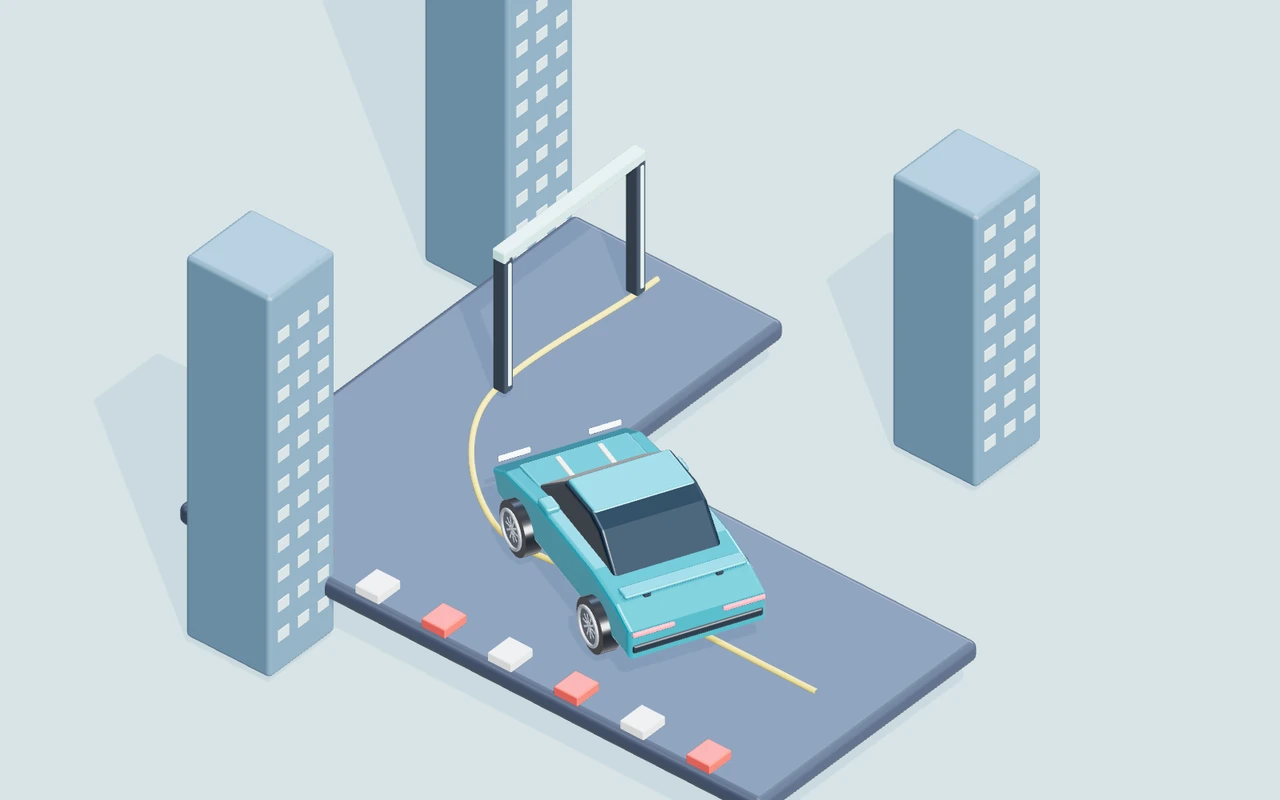
The nearest surface is not always the most useful thing to watch. As you approach a wider turning area, identify where the next narrow segment leaves it. That gives the turn a destination. Without that reference, steering can become a reaction to whichever edge looks closest, and the car may leave the pad with no settled heading.
Use the pad as a place to change direction, not as a place to spend every spare metre building speed. Read the incoming line and the outgoing line together. You do not need to memorise the whole course before starting; you need enough of the next section to prepare the current turn. If the camera view makes the outgoing segment difficult to see, reduce movement while looking. A calmer observation is more useful than a quick correction made without knowing where it should end.
Slow before turning: Keep two problems apart
Braking and steering can overlap, but learning them as one urgent action often hides the source of a mistake. If you enter a bend too quickly, the resulting wide line may look like weak steering. If you slow early enough, you can see how much direction input actually changes the heading within the supported turning space.
Choose an approach point before the narrow segment opens into the pad. Begin reducing speed there, then turn once the car has room. The point is an experiment, not a universal marker that guarantees every corner. Watch how much of the pad remains available when you start steering. If you arrive near the far edge before the turn is prepared, move the slowdown earlier. Keep your attention on the space you are preserving rather than on how quickly the previous straight was completed.
Release the direction: A heading needs time to settle
Holding a steering direction after the car points toward the next segment can undo a good turn. The vehicle continues changing its line while you are already accelerating away. From the camera, that can look like a sudden drift toward the edge, even though the direction input never stopped.
Make release part of the technique. As the outgoing segment lines up, stop the turn input and use a measured acceleration. Watch the vehicle’s direction over the first supported metres. If it is still crossing the road, the heading was not ready for the exit. Correct within the wider space when possible instead of carrying an unfinished turn onto the narrow segment. A successful bend includes the departure, so do not judge it only by whether the car stayed on the pad during the middle of the turn.
Use the road as evidence: Read repeated edge approaches
An occasional edge approach can come from a rushed finger movement. Repeatedly approaching the same side at the same corner suggests a pattern in preparation. Perhaps you begin the turn too late, hold it too long or accelerate before releasing. That pattern is useful because it gives you something specific to adjust.
Keep the difficulty fixed while studying the bend. Low gives relevant routes more room and a calmer pace; changing to a narrower setting halfway through the comparison changes the conditions. Once the line is understandable, test it on another attempt and then a more demanding setting if you want. The goal is to recognise how your sequence positions the car, not to blame the width whenever a hurried exit uses the last available space. A careful turn creates a better starting position for the following straight.
A wide entry becomes a late turn
You reach the turning pad quickly and begin steering only when the far edge looks close. The car stays supported briefly, but the outgoing road is still at an angle when you try to leave. Repeat the approach with earlier braking. Keep the intended direction the same and begin the turn within the pad rather than waiting for the edge to become the main visual reference.
Watch whether the next attempt leaves a useful area in front of the car while the heading changes. More available pad space indicates that the entry speed was part of the problem. Keep the earlier slowdown and refine the release separately. Do not immediately add more steering strength; first see whether a prepared entry gives the normal turn enough time to line up with the road.
The bend works but the exit fails
Your car turns across the wider pad without falling. As it reaches the narrow outgoing section, it continues rotating and heads toward the outside edge, despite the centre of the bend feeling controlled. Make steering release the experiment. Stop the direction input as the car lines up, then accelerate gently into the next segment. Keep the earlier brake point and approach position unchanged.
Compare the heading during the first metres after the pad. A calmer exit should make the car travel along the segment rather than keep cutting across it after the turn seems finished. If the heading remains diagonal, complete more of the turn within the supported pad. Avoid using the narrow segment as the place to finish a large direction change that should have been prepared before leaving.
Small corrections become a zigzag
On the outgoing straight, you alternate left and right because each correction appears to move the car past the centre. The road is narrow enough that you watch the nearest edge more than the route ahead. Reduce speed and shorten one correction. Release, observe the heading and then decide whether another input is needed. Do not hold an opposite direction simply because the car is not perfectly centred yet.
Watch whether the lateral movement becomes easier to predict. The useful evidence is fewer unnecessary reversals of direction, with the car still facing along the supported road. Keep a slightly off-centre but stable line if there is safe space. Chasing exact visual centring with repeated large inputs can create more danger than allowing a settled car to continue toward the next wider turning area.
A familiar corner becomes unfamiliar on High
The bend was comfortable on Low, but a narrower or faster challenge condition makes the same late correction unreliable. You react by holding the steering longer and leaving less time to read the exit. Carry the learned sequence forward and change only the preparation point. Begin reducing speed earlier, then inspect the space available before turning. Keep the familiar release rather than replacing the whole technique.
Observe which part of the sequence now lacks room. If the car enters settled but exits diagonally, refine alignment. If it reaches the pad too quickly, return attention to the approach. Treat the higher difficulty as a different practice condition. Move back to Low when the sequence becomes unclear, rehearse the action and return with a specific adjustment instead of repeatedly accepting the same unexplained fall.
Keep the experiment useful: Controls, recovery and setup
Before trying the exercise, confirm the current mission in Skywire Drive: Cross a three-metre ribbon road forty floors above the city, then stop on the final roof. The player’s controls table is the reference for the actual actions available. W / ↑ means accelerate. S / ↓ means brake; keep holding to reverse. A / D means steer. Start and focus the canvas before using the keyboard. On a phone, use the labelled touch actions under the scene. Change one input at a time while learning the response; unfamiliar finger placement can otherwise look like an unexplained change in the game’s handling.
Difficulty and Graphics answer different questions. Low creates a calmer learning condition by changing the relevant mission settings; Medium removes some assistance; High uses the base challenge. Changing difficulty begins a fresh run, so choose it before comparing attempts. Graphics changes the rendered scene: Low reduces resolution and disables sunlight shadows, Medium adds shadows, and High increases sharpness, shadow detail and material reflections. A clearer picture can help you read the scene, but it does not replace the movement decision described in this article. Keep difficulty fixed while testing a technique.
Three lives give a run room to continue after detected failure. Read the reason on the Continue panel and choose one correction before recovering. Continue restores a safe position while completed mission objectives remain where the mode supports them. Reset vehicle can recover an awkward position without refreshing the page or spending a life. Recovery does not mean a completely fresh mission: choose Start a new run when you want the original opening. A paused panel stops the active simulation, and a voluntary reset adds no time penalty.
Use the pause control if you need to read, change hand position or look away. Sound and background music have separate controls and begin after an interaction; they are optional feedback rather than prerequisites for understanding the visible target. Fullscreen gives the scene more room, with an expanded-player fallback where the native API is unavailable. If your experiment is about steering or timing, keep the browser, input arrangement and graphics profile consistent. A score from one isolated attempt tells you less than a decision that leaves the vehicle well positioned in several attempts.
Decisions at a glance
| Situation | Useful action | Evidence to watch |
|---|---|---|
| A wide entry becomes a late turn | Repeat the approach with earlier braking. Keep the intended direction the same and begin the turn within the pad rather than waiting for the edge to become the main visual reference. | Watch whether the next attempt leaves a useful area in front of the car while the heading changes. More available pad space indicates that the entry speed was part of the problem. |
| The bend works but the exit fails | Make steering release the experiment. Stop the direction input as the car lines up, then accelerate gently into the next segment. Keep the earlier brake point and approach position unchanged. | Compare the heading during the first metres after the pad. A calmer exit should make the car travel along the segment rather than keep cutting across it after the turn seems finished. |
| Small corrections become a zigzag | Reduce speed and shorten one correction. Release, observe the heading and then decide whether another input is needed. Do not hold an opposite direction simply because the car is not perfectly centred yet. | Watch whether the lateral movement becomes easier to predict. The useful evidence is fewer unnecessary reversals of direction, with the car still facing along the supported road. |
| A familiar corner becomes unfamiliar on High | Carry the learned sequence forward and change only the preparation point. Begin reducing speed earlier, then inspect the space available before turning. Keep the familiar release rather than replacing the whole technique. | Observe which part of the sequence now lacks room. If the car enters settled but exits diagonally, refine alignment. If it reaches the pad too quickly, return attention to the approach. |
YOUR NEXT SESSION
Put it into practice
Choose one turning pad and follow a four-part sequence: identify the outgoing segment, slow before entering, turn within supported space and release before accelerating away. Make two attempts with the same difficulty. On the second, change only the point at which you begin reducing speed. Compare how much of the pad remains available while the heading changes. Keep the better preparation and test the steering release on a later attempt. Use a checkpoint or a fresh run according to which starting position lets you compare that corner most clearly.
Play Skywire DriveFrequently asked questions
Do I need to keep the car exactly in the centre?+
A stable supported line is more useful than constantly chasing a perfect centre point. Leave room around the vehicle and keep it facing along the segment. Make a small correction when needed, then observe its effect before immediately adding an opposite input.
Why does the car leave the pad at an angle?+
The turn may have started too late, or the steering input may still be held as you accelerate away. Prepare the heading inside the wider supported area and make release part of the departure. Judge the bend by the exit as well as the middle.
Will fullscreen make narrow turns easier?+
A larger scene can make the outgoing route easier to read, but it does not change the line you choose. Use fullscreen if it improves visibility, then keep the same preparation sequence. Difficulty controls relevant challenge settings; graphics and fullscreen mainly affect presentation.
Final words
A narrow-road turn begins on the approach and ends after the exit. Earlier speed control, a visible outgoing direction and a deliberate steering release create room for the car to settle. Use that sequence before asking for a faster run.
Choose one idea from this article, try it in your next run, and notice what changes. A calmer, repeatable attempt gives you something useful to build on.