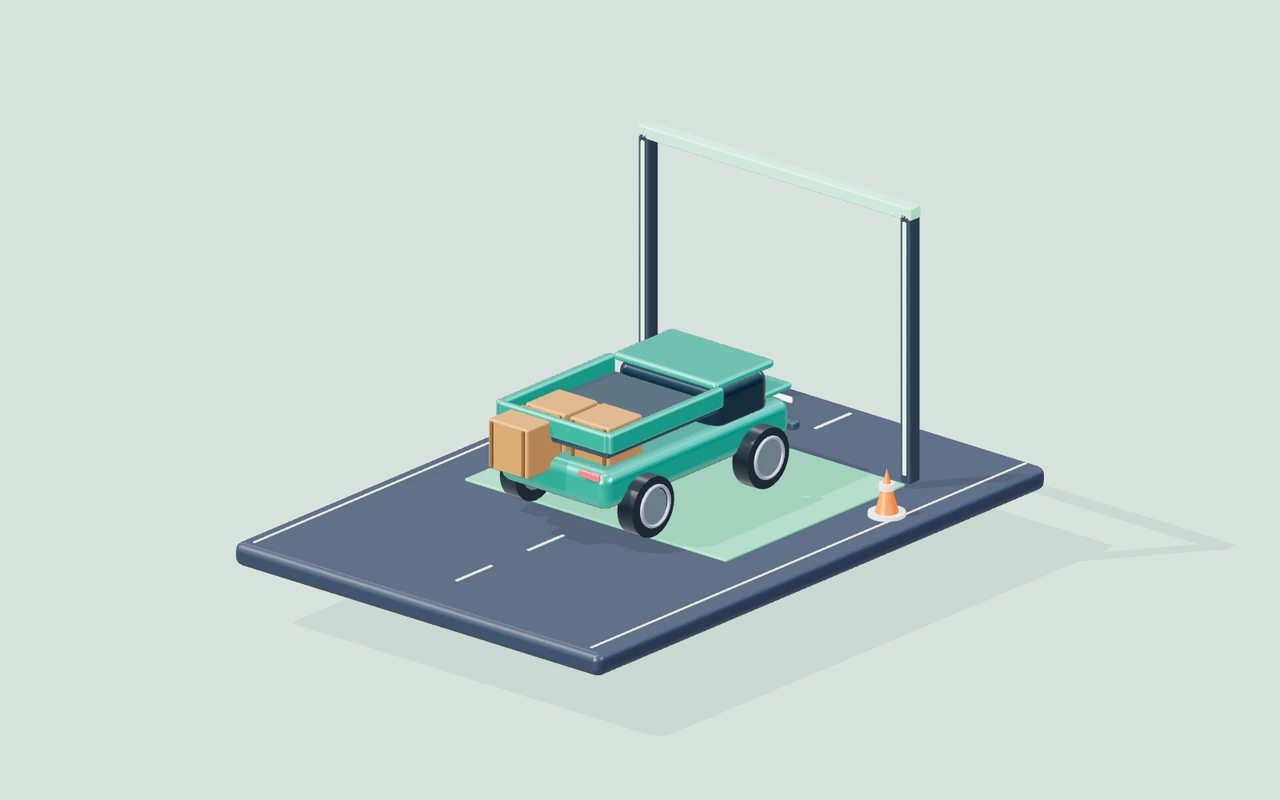
The delivery marker can make a cargo run feel finished before the load is actually settled. After keeping the crates through a route, a rushed final turn or abrupt stop can undo the preparation that made the earlier corners manageable. Cargo Balance rewards transport and a stable delivery condition, so the last approach deserves its own plan. This article focuses on the transition from driving to delivery: reduce movement before the final bend, read the loose load and stop in a way that leaves the mission condition understandable. It is a game-specific practice guide, not a model for securing or transporting real cargo.
Prepare the final bend: Keep the load in the decision
As the destination becomes visible, it is easy to shift attention entirely to the car and marker. The crates still have their own movement, and the final corner can disturb them just like an earlier one. Read the supported route and the load before deciding how quickly to enter that bend.
Begin reducing speed while the car is still on a clearer approach. A measured turn gives you time to see whether the cargo remains manageable rather than discovering its movement at the delivery area. Do not treat the last marker as a reason to accelerate through every remaining metre. The useful objective is to arrive with the required load and enough control to settle it. A promising route needs a final transition that preserves those conditions, so keep the cargo in view until the delivery has actually been recognised.
Turn without adding urgency: The route and load should agree
A large direction change at the final moment can make the destination closer while making the load less stable. If you combine that turn with a fast approach, the car’s arrival may look accurate even as the crates move across the bed. Position and cargo state need to be read together.
Choose a line that lets the vehicle approach the delivery area with fewer urgent adjustments. Keep the heading change manageable and avoid adding a second correction before the first has a visible result. If a crate begins to move noticeably, use that as evidence about the preparation rather than immediately trying to force the car onto the marker. A calmer line can preserve a useful load without requiring a perfect run through every earlier corner. Practise the final turn as a separate question once the route leading to it is familiar.
Let delivery settle: Arrival is not the hold condition
Reaching the destination area is an important step, but a stable delivery requires more than passing through it. The car and required cargo need to remain in a usable settled state long enough for the game’s hold condition. If you keep steering or moving because the result is not instant, you may disturb the very position you are trying to complete.
Reduce movement deliberately and watch the visible delivery feedback. Give a promising position time to become stable before adding another adjustment. If the condition is not progressing, inspect location, remaining motion and load separately. Those observations lead to different corrections. A vehicle correctly placed but still rolling is not the same problem as a stopped car without the required cargo. Use the game’s actual indicators rather than assuming proximity to the marker is the only thing that matters.
Use recovery to isolate the approach: Keep the lesson specific
Cargo recovery reloads the required crates at the current safe checkpoint, giving you another chance to compare a route section. That makes it useful for studying a troublesome final approach, but it does not decide the speed or steering that will preserve the load next time.
After a failed attempt, identify the last point where the cargo looked manageable. Choose one correction before continuing: slow earlier, simplify the turn or settle more deliberately at delivery. Keep the rest of the route familiar enough to read the difference. A fresh run restores the original opening when you want to rehearse the complete transport. Treat recovery as a way to make the question smaller, not as permission to repeat a rushed final corner indefinitely. The useful result is an approach you can explain and carry into a full delivery attempt.
The final turn disturbs a previously stable load
Your crates remain manageable through the earlier route. With the destination visible, you approach the last bend faster and add a large turn, making the cargo move just before the delivery area. Repeat with earlier speed reduction before that final bend. Keep the intended route similar and make the turn more measured, so the change answers the load movement instead of simply getting the car closer to the marker.
Watch the crates during and after the turn. A useful adjustment should preserve a calmer load into the delivery approach, even if the car takes longer to cover the final metres. Keep the preparation that settles the load and then refine the stop separately. The marker’s visibility should not remove the need to read the transport conditions on the last corner.
The car passes through delivery without settling
You drive across the destination area with the cargo still present, but the hold condition does not complete. You turn back immediately while carrying movement, creating another hurried approach to the same marker. Prepare a settled arrival instead of another fast pass. Reduce speed before entering the area, align the car and leave a clear moment for the delivery feedback to show whether the position is useful.
Notice remaining motion and load state while the vehicle is near the destination. The condition concerns a stable delivery, not simply a single crossing of the coloured marker. If the stop is incomplete, adjust the unresolved part only. Do not keep circling the area at the same pace while hoping that another pass will replace the need for a settled hold.
An extra correction spoils a promising stop
The car appears well placed and the load is still present. Because the result has not appeared immediately, you nudge the vehicle again, disturbing the heading and movement while the delivery condition is becoming readable. Allow a settled pause and watch the current feedback before pressing another direction. Check whether location, motion or cargo is actually unresolved rather than assuming that every moment without a result requires movement.
Observe whether the hold progresses while the car remains still. A promising position needs time to show its usefulness, and another unnecessary correction can make that evidence harder to see. Keep the settled routine on the next attempt. If a genuine position adjustment is needed, make it small, release and inspect again instead of turning the final stop into a continuous sequence of guesses.
Recovery provides crates but the same bend fails again
After losing cargo, you Continue from a checkpoint with the required load restored. You use the same quick approach to the difficult bend, and the new crates begin moving in a familiar way. Use the paused panel to select one correction before driving. Identify the last manageable part of the approach, then reduce speed or simplify the turn there while keeping the rest of the section similar.
Compare the load movement with the earlier attempt. Restored crates create another experiment, but the useful evidence comes from changing the preparation that previously disturbed them. Preserve a calmer section once it works and connect it with the delivery stop. Use a fresh run later to test the whole route, rather than expecting recovery alone to solve an unchanged driving decision.
Keep the experiment useful: Controls, recovery and setup
Before trying the exercise, confirm the current mission in Cargo Balance: Carry three loose crates through a winding harbour route and stop at the delivery pad. The player’s controls table is the reference for the actual actions available. W / ↑ means accelerate. S / ↓ means brake; keep holding to reverse. A / D means steer. Start and focus the canvas before using the keyboard. On a phone, use the labelled touch actions under the scene. Change one input at a time while learning the response; unfamiliar finger placement can otherwise look like an unexplained change in the game’s handling.
Difficulty and Graphics answer different questions. Low creates a calmer learning condition by changing the relevant mission settings; Medium removes some assistance; High uses the base challenge. Changing difficulty begins a fresh run, so choose it before comparing attempts. Graphics changes the rendered scene: Low reduces resolution and disables sunlight shadows, Medium adds shadows, and High increases sharpness, shadow detail and material reflections. A clearer picture can help you read the scene, but it does not replace the movement decision described in this article. Keep difficulty fixed while testing a technique.
Three lives give a run room to continue after detected failure. Read the reason on the Continue panel and choose one correction before recovering. Continue restores a safe position while completed mission objectives remain where the mode supports them. Reset vehicle can recover an awkward position without refreshing the page or spending a life. Recovery does not mean a completely fresh mission: choose Start a new run when you want the original opening. A paused panel stops the active simulation, and a voluntary reset adds no time penalty.
Use the pause control if you need to read, change hand position or look away. Sound and background music have separate controls and begin after an interaction; they are optional feedback rather than prerequisites for understanding the visible target. Fullscreen gives the scene more room, with an expanded-player fallback where the native API is unavailable. If your experiment is about steering or timing, keep the browser, input arrangement and graphics profile consistent. A score from one isolated attempt tells you less than a decision that leaves the vehicle well positioned in several attempts.
Decisions at a glance
| Situation | Useful action | Evidence to watch |
|---|---|---|
| The final turn disturbs a previously stable load | Repeat with earlier speed reduction before that final bend. Keep the intended route similar and make the turn more measured, so the change answers the load movement instead of simply getting the car closer to the marker. | Watch the crates during and after the turn. A useful adjustment should preserve a calmer load into the delivery approach, even if the car takes longer to cover the final metres. |
| The car passes through delivery without settling | Prepare a settled arrival instead of another fast pass. Reduce speed before entering the area, align the car and leave a clear moment for the delivery feedback to show whether the position is useful. | Notice remaining motion and load state while the vehicle is near the destination. The condition concerns a stable delivery, not simply a single crossing of the coloured marker. |
| An extra correction spoils a promising stop | Allow a settled pause and watch the current feedback before pressing another direction. Check whether location, motion or cargo is actually unresolved rather than assuming that every moment without a result requires movement. | Observe whether the hold progresses while the car remains still. A promising position needs time to show its usefulness, and another unnecessary correction can make that evidence harder to see. |
| Recovery provides crates but the same bend fails again | Use the paused panel to select one correction before driving. Identify the last manageable part of the approach, then reduce speed or simplify the turn there while keeping the rest of the section similar. | Compare the load movement with the earlier attempt. Restored crates create another experiment, but the useful evidence comes from changing the preparation that previously disturbed them. |
YOUR NEXT SESSION
Put it into practice
Pick the final bend or delivery approach as the only practice target. Keep the earlier route familiar and reduce speed before entering that target section. Watch the cargo as you turn, then prepare a settled stop near delivery. Give the hold feedback a chance to become clear before making another correction. After a failure, use the restored checkpoint load to test one earlier slowdown or smaller turn. Compare cargo state, remaining movement and delivery feedback separately, and finish with one approach you can repeat during a fresh transport run.
Play Cargo BalanceFrequently asked questions
Does reaching the destination immediately complete delivery?+
The game expects the required load and a stable delivery condition. A fast pass near the marker can be incomplete. Reduce movement, align the vehicle and watch the hold feedback before deciding that another steering or throttle input is needed.
What does cargo recovery restore?+
The current safe checkpoint is used for recovery, and the required crates are reloaded so you can continue the route. Completed progress remains useful within the run. Use the next attempt to change the approach that disturbed the load rather than repeating it unchanged.
Should I keep adjusting while waiting for the hold?+
Only correct an observed problem. If the position looks useful, allow it to settle and read the feedback first. An unnecessary nudge can disturb location or motion before the delivery condition becomes clear, turning a promising stop into another uncertain approach.
Final words
A cargo route ends with a stable delivery, not just arrival beside a marker. Keep reading the load through the last turn, prepare a settled stop and let the hold condition become clear. Recovery supplies another experiment; a calmer approach makes that experiment useful.
Choose one idea from this article, try it in your next run, and notice what changes. A calmer, repeatable attempt gives you something useful to build on.