A rooftop scene can hide very different rules. A jumping car needs takeoff speed and landing support, a ribbon-road car needs a line that keeps its wheels grounded, and a flying car needs attitude control throughout the journey. Practising one does not automatically solve the other two. Start by identifying what completes the current mission before deciding that more speed or a bigger input is the answer.
A jump starts before the edge
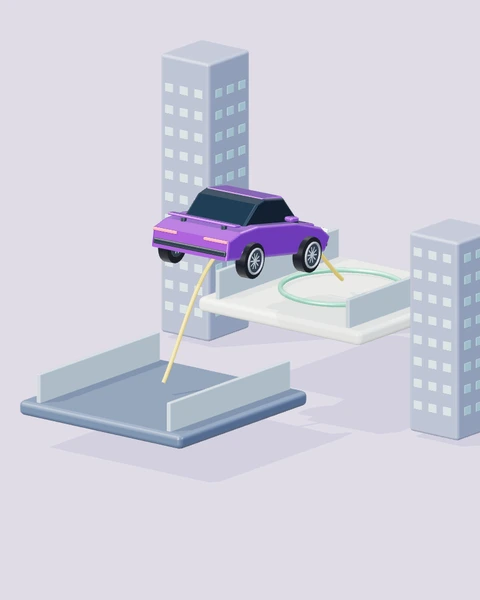
In Rooftop Leap, Space stores upward launch power while grounded. Releasing launches, while throttle and heading supply horizontal travel. A stationary full-power hop therefore goes mostly upward. A fast car without a jump simply drives off the roof. Practise those two inputs separately before combining them.
The destination needs actual wheel contact. A pass through its marker is incomplete, and the raised second roof changes the clearance needed at arrival. Set direction on the roof, release with support beneath the wheels and brake after landing. If the car hits the near face, compare power and approach; if it overshoots, compare flight time and momentum.
A narrow road rewards contact
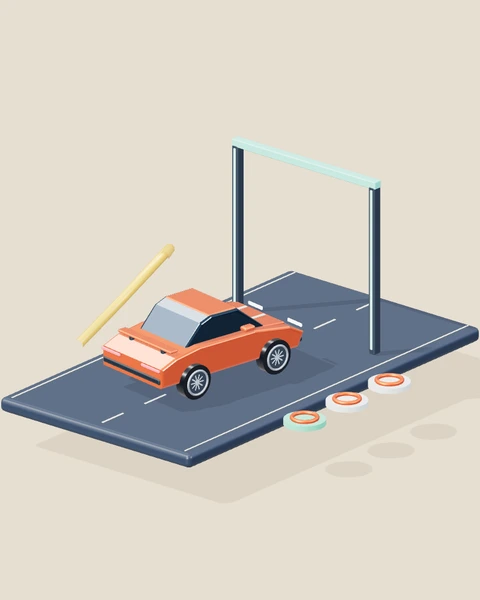
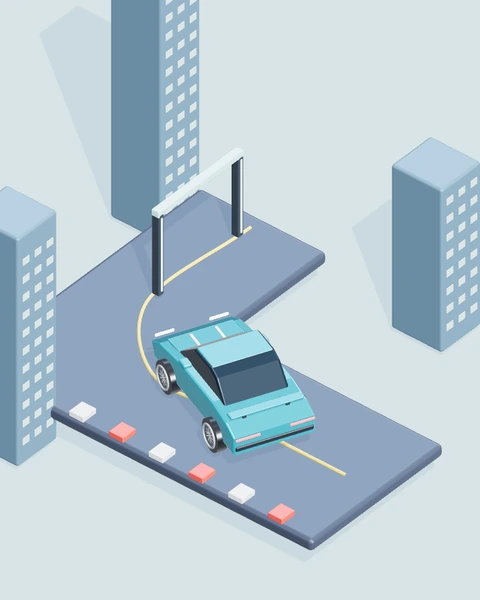
Skywire Drive does not use the same launch. The connected ribbon is only 3.2 metres wide, and its changing corners need low-speed steering. Watch the whole chassis against the edges. A centred front bumper can still leave the rear wheels outside the outgoing strip.
Brake before the corner and return steering toward centre once aligned. A full stop is allowed and can be a useful learning step. At the final roof, slow near the STOP zone rather than assuming five route points finish the game. Here, maintaining support is the challenge that jumping would avoid.
Flight keeps asking for correction
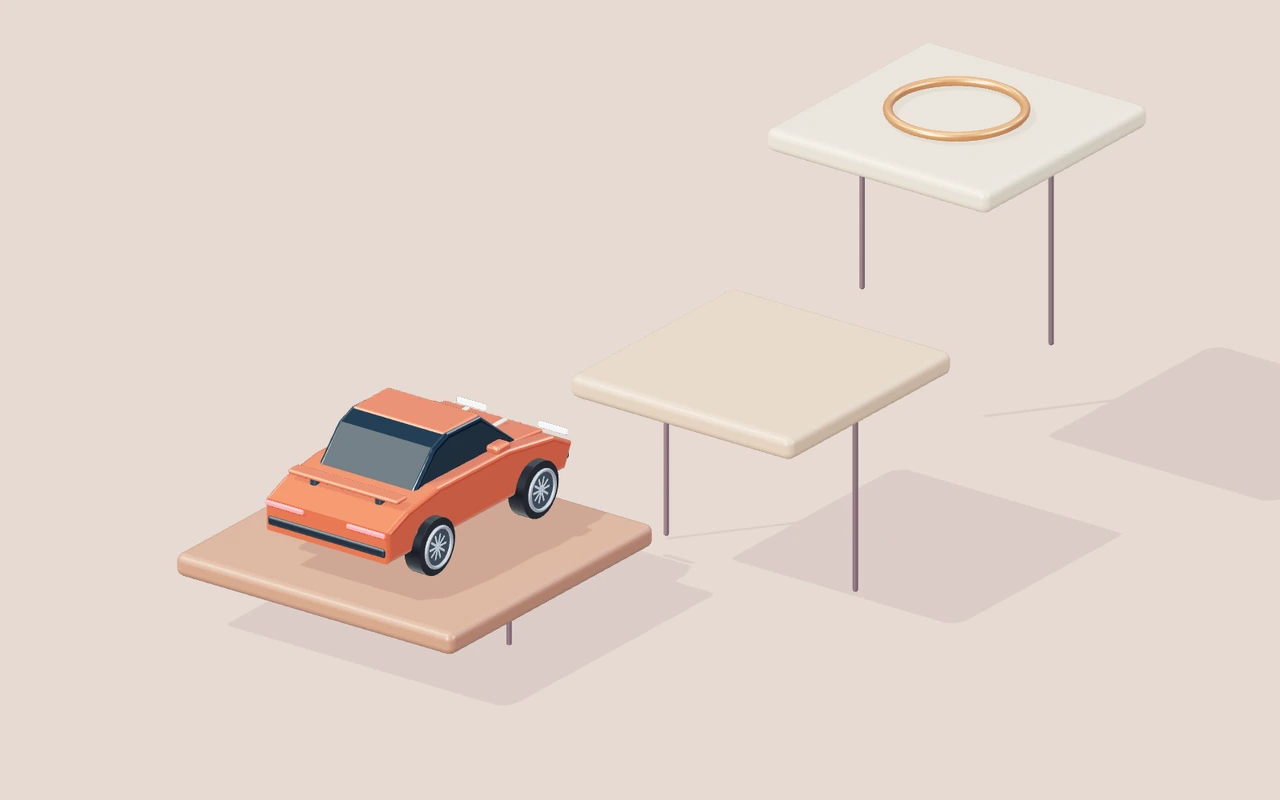
Rocket Rings begins with forward movement already present. W and S change pitch, A and D change yaw, and Space supplies extra lift. Releasing an input does not instantly erase the chosen attitude. Counter the existing turn when the next ring needs another line.
The targets change height and lateral position in order. Read the next-ring hint as a coarse position cue, then inspect the actual flight path. Velocity responds smoothly, so begin direction changes early. Lift consumes additional finite fuel rather than a regenerating road boost.
Use a failure to name one variable
A fall is an outcome, not a diagnosis. Ask whether you lacked takeoff support, arrived at the wrong position or lost wheel contact in a turn. Those errors need different next attempts.
Change one variable and keep the rest familiar: release time in a jump, approach speed on a ribbon or turn start in flight. Record the specific visible improvement, such as a rear wheel clearing the lip or an approach staying inside a strip. Do not compare scores across these modes as if they measured one common skill.
Decisions at a glance
| Mode | Primary decision | Completion evidence |
|---|---|---|
| Rooftop Leap | Power, speed and launch line | Three ordered wheel-supported landings |
| Skywire Drive | Approach speed and steering | Five route points and a low-speed final stop |
| Rocket Rings | Pitch, yaw and early correction | Four ordered airborne ring captures |
YOUR NEXT SESSION
Put it into practice
Play one short attempt of each mode. For Rooftop Leap, test a grounded stationary charge before trying the first roof. For Skywire, cross the opening straight and stop before the bend. For Rocket Rings, aim only for the first target and observe how pitch changes the flight line. Write down the input that mattered in each attempt.
Play Rooftop LeapFrequently asked questions
Why did flying through a marker not count?+
A completed roof needs wheel contact with the next required physical surface. An airborne pass through the decorative marker is insufficient, and reaching a later roof before its predecessor does not skip the order.
Can I jump while already falling?+
Charging and releasing require grounded support. Once the car has left the roof without a launch, holding the jump button cannot create another midair jump. Recover or let the fall return you to the last completed roof.
Does more power always produce a better jump?+
No. More upward speed changes flight time, while approach speed and heading determine where you travel. A powerful stationary jump goes upward; a powerful fast launch can carry beyond the destination. Match the arc to the current gap.
Final words
Height is scenery until a rule makes it a challenge. Read that rule, then practise the input that actually affects it.
Choose one idea from this article, try it in your next run, and notice what changes. A calmer, repeatable attempt gives you something useful to build on.