A moving platform changes the question a jump has to answer. You are not aiming only at the surface’s current position; you are choosing a departure that can meet it during the flight. Kinetic Crossing makes that relationship visible through sideways-moving targets and supported landings. Guessing from the nearest moment often produces corrections that address the wrong part of the attempt. This guide separates observation, departure and arrival, so you can compare one timing decision at a time. The goal is a usable landing window, with enough room to settle, rather than a promise that the platform will always be waiting directly ahead.
Watch the target’s direction: A position is only one moment
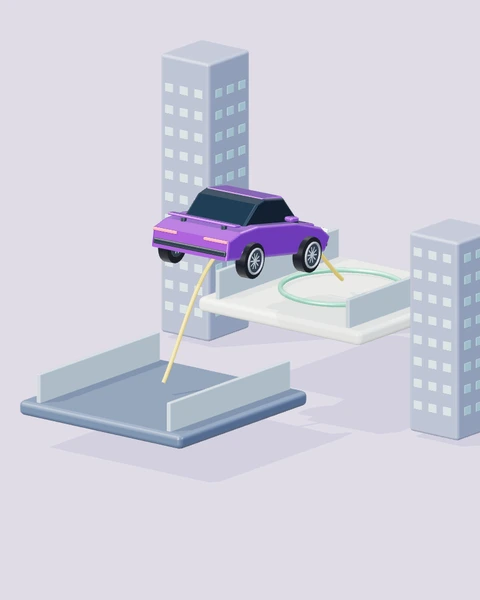
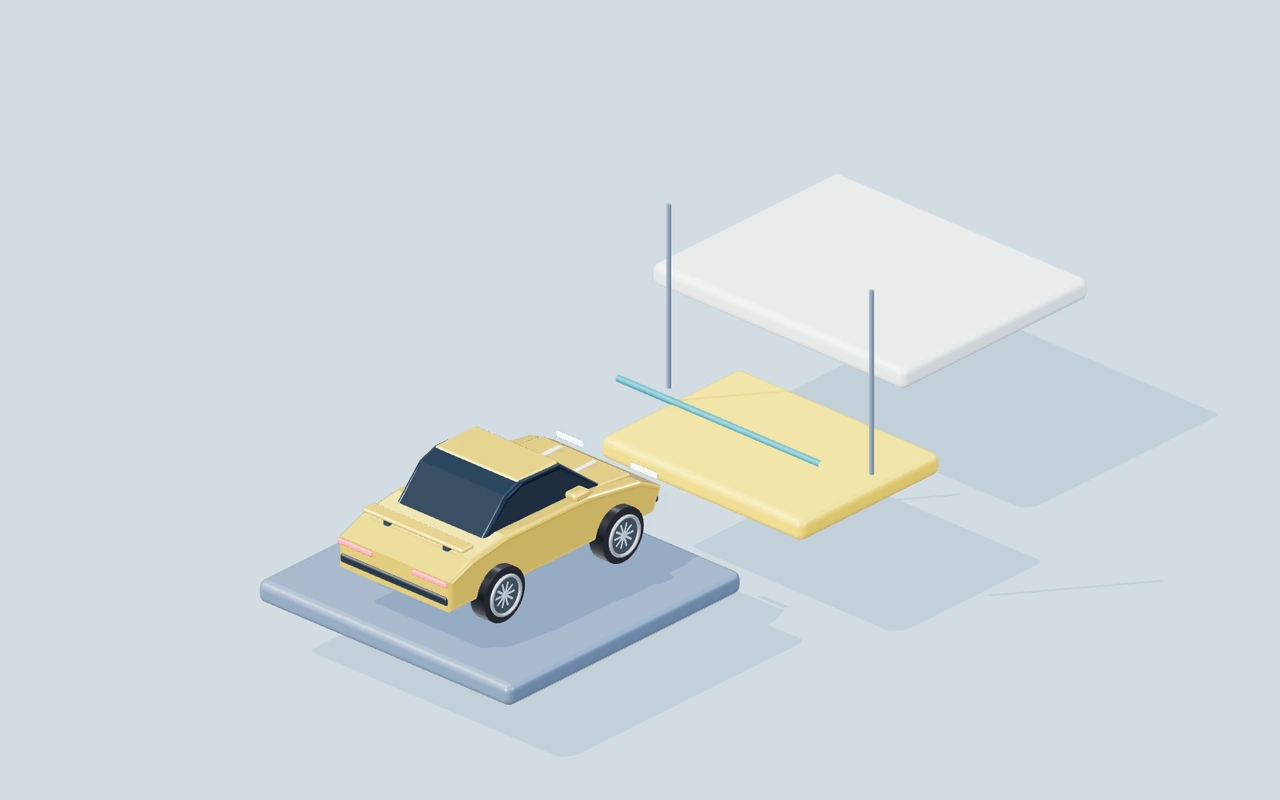
A landing surface near the centre can be moving through that position or returning toward it. If you look only at where it is now, you miss the movement that will matter during the car’s flight. Watch enough of the cycle to recognise the direction and the usable supported area.
Choose a familiar observation place on the starting surface. Keeping that view consistent makes the target’s movement easier to interpret between attempts. You do not need to calculate an exact flight equation to learn a useful window. You need a prediction you can test: this departure gives the car a plausible meeting with that moving surface. Low slows applicable hazards and creates more forgiveness, providing time to connect the visual cycle with the result. Use it to learn the relationship before asking the same technique to work under tighter conditions.
Prepare the departure line: Timing needs an aligned approach
A good window can still fail if the car leaves diagonally or without usable support. Prepare heading and jump action on the starting surface before committing. If you are steering, charging and judging the platform simultaneously at the edge, it becomes difficult to remember which part made the attempt unreliable.
Use a supported preparation you can describe. Align toward the intended meeting area, release unnecessary steering and keep the charge familiar while testing departure timing. This removes an obvious source of variation. Once timing becomes understandable, you can investigate a different charge or approach pace separately. The surface’s movement already adds one changing condition; there is little value in adding several unknown input changes before the first comparison. A stable departure makes the arriving line easier to connect with the window you thought you saw.
Compare one window: Keep the launch familiar
A failed meeting can tempt you to change both timing and jump strength. That might produce a different arrival, but it also makes the result harder to interpret. Begin by keeping the launch preparation similar and changing the moment at which you commit within the platform’s cycle.
Watch whether the surface is ahead of, behind or beneath the car’s arriving line. Those observations suggest how the chosen window related to the flight, without promising an exact universal adjustment. If the target passes to the side while distance remains useful, return attention to timing and alignment before adding more charge. If the car consistently falls short even when the platform is well positioned, inspect departure preparation. A helpful attempt answers one question. A larger or earlier input is only useful when that question explains why you chose it.
Land for the next action: A moving target still needs support
Passing near a platform while airborne is not the same as completing a supported landing. After the car meets the surface, read whether it is settled and whether the progress display recognises the target. Keep enough room for the next departure instead of immediately continuing every held action from the previous jump.
The moving surface can make the arrival feel different from a fixed rooftop. Let that difference become readable before launching again. Checkpoint recovery helps preserve completed targets and isolate the next difficult section, but it does not choose the timing for you. If an arrival is missed, identify whether the issue was the window, departure line or remaining movement after contact. A sequence of understandable landings is more useful than several apparent near meetings which never leave the vehicle supported enough to continue.
The surface moves away from the expected arrival
You launch when the target appears well aligned, but it travels sideways during the flight. The car reaches useful distance while the platform is no longer beneath the arriving path. Recover and watch direction as well as position. Keep charge and approach familiar, then test a different departure moment within the observed cycle rather than increasing several inputs at once.
Notice how the platform’s position at arrival differs from its position at launch. That comparison gives the window a visible consequence and helps separate timing from a basic distance problem. Keep the readable departure and refine the timing again if needed. Do not treat every sideways miss as evidence that the jump needs more strength; the moving target may have been in the wrong part of its cycle.
A promising window is spoiled by a diagonal departure
The platform is moving into a useful area, but the car leaves while a steering input is still changing its heading. Its path crosses the intended meeting instead of travelling along the line you prepared. Make alignment the next experiment. Prepare the heading on the supported starting surface, release steering and use a familiar timing reference. Let the movement of the target remain the condition you observe.
Compare the car’s direction at takeoff and arrival. A cleaner line can make the platform meeting easier to interpret even if the window still needs a small timing adjustment. Preserve the improved departure before changing charge. If the line and timing both change together, a later success or failure cannot tell you which part actually became more useful.
The car passes near the platform but progress does not advance
Your flight crosses close to the moving target and appears promising in the following camera, yet the vehicle does not settle on the surface. The progress display still shows the same next objective. Read the arrival as a support problem as well as a distance problem. Choose a meeting area that leaves usable surface under the car, and observe the wheels and position before beginning another launch sequence.
Watch whether the next attempt creates a recognisable touchdown rather than merely a nearby airborne passage. The progress display confirms the mission’s supported landing, while visual proximity alone does not. Use the successful support as the basis for the next target. If arrival remains rushed, refine the line or window before treating a near meeting as a completed step and immediately holding the next jump action.
A slower setting becomes a chance to learn the cycle
On a demanding setting, the target seems to move through the useful area before you can prepare a departure. You keep reacting faster, but the inputs and observed window become less consistent with every attempt. Use Low and watch a recognisable cycle from a settled starting position. Keep the launch preparation familiar and decide on a window before committing, rather than waiting until the target is already passing close.
Notice whether you can predict the target’s direction and arriving position more clearly. The calmer setting should give the observation a purpose, not simply produce a lucky landing by adding spare room. Carry that timing routine into later attempts, then test Medium if you want. Treat the tighter condition as a new comparison and preserve the learned departure instead of replacing it with a hurried guess.
Keep the experiment useful: Controls, recovery and setup
Before trying the exercise, confirm the current mission in Kinetic Crossing: Time four jumps onto platforms that slide sideways over the city. The player’s controls table is the reference for the actual actions available. W / ↑ means accelerate. S / ↓ means brake; keep holding to reverse. A / D means steer. Start and focus the canvas before using the keyboard. On a phone, use the labelled touch actions under the scene. Change one input at a time while learning the response; unfamiliar finger placement can otherwise look like an unexplained change in the game’s handling.
Difficulty and Graphics answer different questions. Low creates a calmer learning condition by changing the relevant mission settings; Medium removes some assistance; High uses the base challenge. Changing difficulty begins a fresh run, so choose it before comparing attempts. Graphics changes the rendered scene: Low reduces resolution and disables sunlight shadows, Medium adds shadows, and High increases sharpness, shadow detail and material reflections. A clearer picture can help you read the scene, but it does not replace the movement decision described in this article. Keep difficulty fixed while testing a technique.
Three lives give a run room to continue after detected failure. Read the reason on the Continue panel and choose one correction before recovering. Continue restores a safe position while completed mission objectives remain where the mode supports them. Reset vehicle can recover an awkward position without refreshing the page or spending a life. Recovery does not mean a completely fresh mission: choose Start a new run when you want the original opening. A paused panel stops the active simulation, and a voluntary reset adds no time penalty.
Use the pause control if you need to read, change hand position or look away. Sound and background music have separate controls and begin after an interaction; they are optional feedback rather than prerequisites for understanding the visible target. Fullscreen gives the scene more room, with an expanded-player fallback where the native API is unavailable. If your experiment is about steering or timing, keep the browser, input arrangement and graphics profile consistent. A score from one isolated attempt tells you less than a decision that leaves the vehicle well positioned in several attempts.
Decisions at a glance
| Situation | Useful action | Evidence to watch |
|---|---|---|
| The surface moves away from the expected arrival | Recover and watch direction as well as position. Keep charge and approach familiar, then test a different departure moment within the observed cycle rather than increasing several inputs at once. | Notice how the platform’s position at arrival differs from its position at launch. That comparison gives the window a visible consequence and helps separate timing from a basic distance problem. |
| A promising window is spoiled by a diagonal departure | Make alignment the next experiment. Prepare the heading on the supported starting surface, release steering and use a familiar timing reference. Let the movement of the target remain the condition you observe. | Compare the car’s direction at takeoff and arrival. A cleaner line can make the platform meeting easier to interpret even if the window still needs a small timing adjustment. |
| The car passes near the platform but progress does not advance | Read the arrival as a support problem as well as a distance problem. Choose a meeting area that leaves usable surface under the car, and observe the wheels and position before beginning another launch sequence. | Watch whether the next attempt creates a recognisable touchdown rather than merely a nearby airborne passage. The progress display confirms the mission’s supported landing, while visual proximity alone does not. |
| A slower setting becomes a chance to learn the cycle | Use Low and watch a recognisable cycle from a settled starting position. Keep the launch preparation familiar and decide on a window before committing, rather than waiting until the target is already passing close. | Notice whether you can predict the target’s direction and arriving position more clearly. The calmer setting should give the observation a purpose, not simply produce a lucky landing by adding spare room. |
YOUR NEXT SESSION
Put it into practice
From one supported starting surface, watch a recognisable target cycle and name a plausible landing window. Keep heading and charge familiar for an initial attempt. On the next, change only the departure moment and compare where the moving surface is when the car arrives. Separate a sideways meeting problem from a short flight or diagonal line. After a supported landing, let the next target become clear before beginning another sequence. Finish with a timing observation you can use again, rather than a claim that one fixed delay fits every platform.
Play Kinetic CrossingFrequently asked questions
Can I aim at the platform’s current position only?+
Its movement during the flight also matters. Watch the direction and a recognisable part of the cycle before committing. A useful departure aims for a plausible meeting at arrival, rather than assuming that a well-aligned surface will stay in the same place.
Should I change charge after every sideways miss?+
Not automatically. Keep the launch familiar while investigating timing and heading. A sideways miss with useful distance may concern the target’s cycle or the departure line. Change strength when the observation gives it a clear purpose, rather than altering every control together.
Why does a near pass sometimes leave progress unchanged?+
The target needs a supported landing. Passing nearby while airborne is not the same as settling on the surface. Watch the car’s arrival and the progress display before assuming the step is complete or immediately preparing the following jump.
Final words
A moving landing requires a prediction about arrival. Read direction, prepare a stable departure and compare one window with a familiar launch. Count a usable supported touchdown as the result, then read the next moving target as a new question.
Choose one idea from this article, try it in your next run, and notice what changes. A calmer, repeatable attempt gives you something useful to build on.