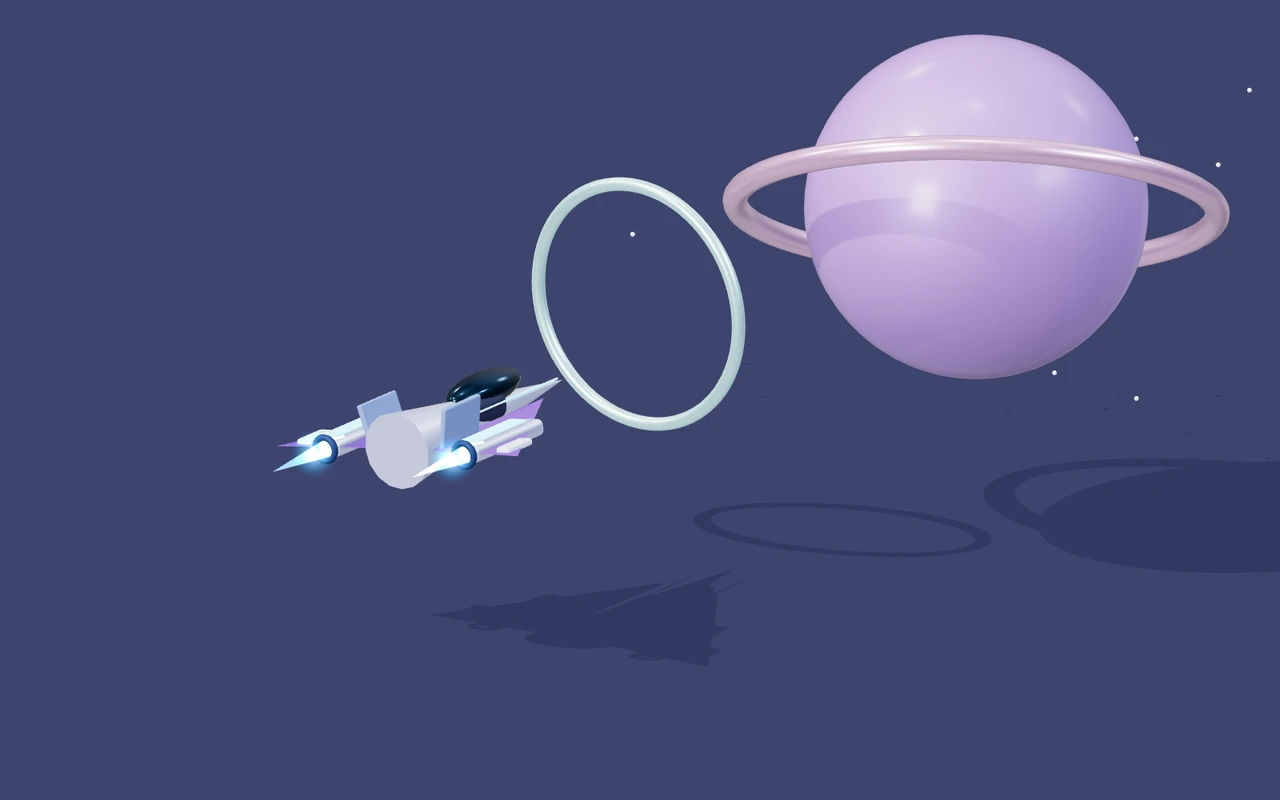
A space corridor asks you to judge objects that are changing size as they approach. In Orbit Breaker, a gate far away needs a small adjustment now; that same gate can demand a frantic move if you wait. The trick is to make decisions while the flight still has room for them.
Use size as a warning
Distant asteroids appear small, then grow as they approach your ship. Look for that change rather than trying to infer danger from colour alone. A large rock near the ship is urgent even if a bright gate is drawing your attention elsewhere. Move out of its projected path before chasing a score opportunity.
The spacecraft can move across the corridor but forward travel is automatic. That means you cannot stop beside a gate and line it up slowly. Choose your position early, then use smaller corrections as the gate gets closer.
Align with the open centre
The circular frame is a guide to the opening, not the point you want to hit. Put the ship inside the centre and hold that position through the pass. Moving diagonally through a gate at the last moment can take you out of the opening just when the score check happens.
On mobile, drag toward the intended position, then slow your finger as you get close. The game uses the position inside the flight area rather than the edge of the phone. Keep your finger away from FIRE while steering so that a control tap does not become an accidental movement.
Plasma clears a straight path
A shot travels forward from the ship's position. It will not curve toward an asteroid that is off to the side. Move into alignment while the rock is still distant and fire, then leave yourself time to dodge if the path stays blocked. Firing repeatedly from an unrelated position adds light without opening the route you need.
You do not have to clear every asteroid. Dodging can be the safer choice when a rock is already close or when firing alignment would take you through another obstacle. Distance contributes to score, so survival keeps earning points even when you miss a target.
Treat a missed gate as a new decision
There is no extra penalty for skipping a gate. If reaching one would put you in a collision path, keep the shield and look ahead. A short protection window follows a hit, but it is time to escape the overlap, not an invitation to chase more obstacles.
During the opening stretch, take only gates near your current position. Once that feels predictable, watch the next gate as well and plan a gentle path between them. Two-minute survival gives you more opportunities than an early attempt that uses every shield for a few additional gates.
Decisions at a glance
| Situation | Priority |
|---|---|
| Close rock, distant gate | Avoid the rock first |
| Gate centre is clear | Align early and hold position |
| Rock sits directly on your line | Fire early or choose a wider route |
YOUR NEXT SESSION
Put it into practice
Start a run and deliberately skip distant side gates for the first 30 seconds. Practise holding a central line, clearing one aligned rock, and making only small gate corrections. Then widen the routes on your next attempt.
Play Orbit BreakerFrequently asked questions
Final words
Early positioning turns depth into useful information. Gates are opportunities; a surviving ship is the thing that can keep taking them.
Choose one idea from this article, try it in your next run, and notice what changes. A calmer, repeatable attempt gives you something useful to build on.