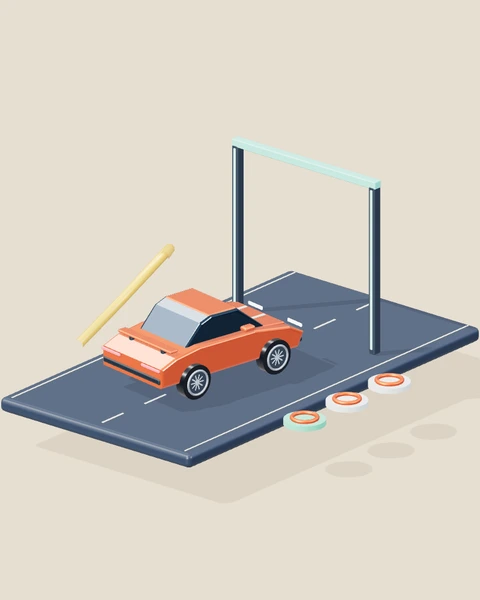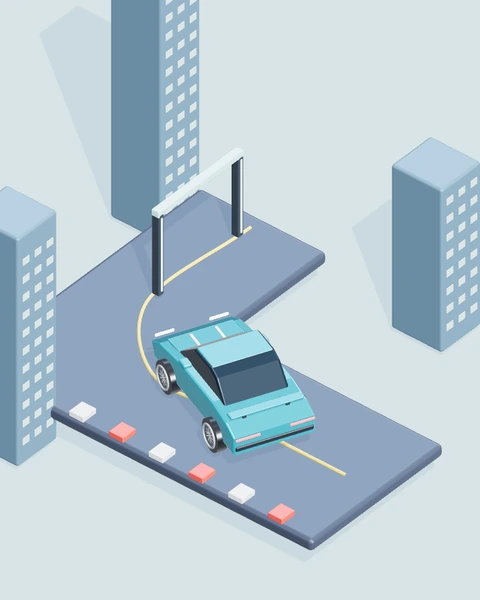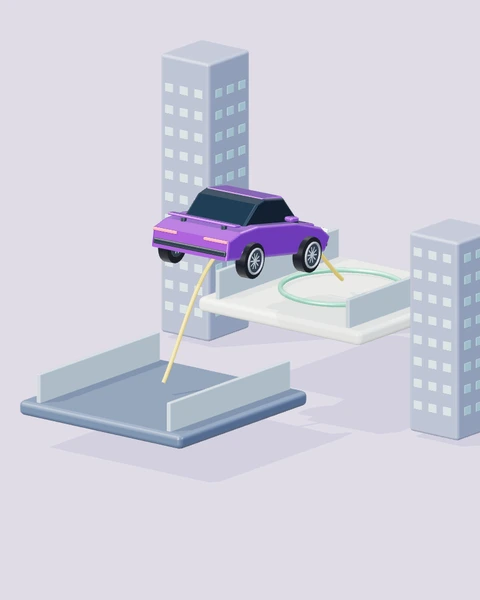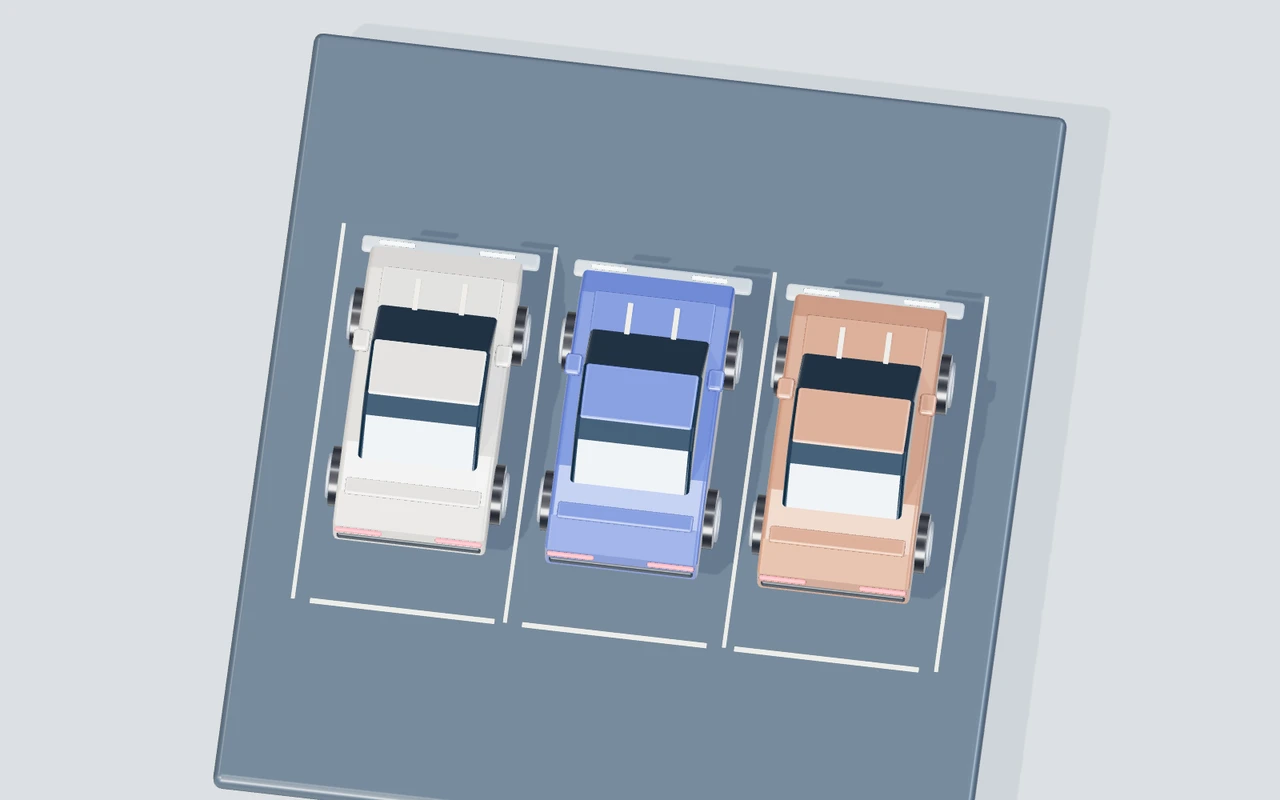
Three ways to practise placement: open bays, reversing into a garage and fitting between parked neighbours. Stop, align and hold the highlighted space. Slow inputs matter more than speed. Every bay checks heading and a settled position; Reverse Garage also requires nearby reverse movement. Read the guide before assuming that crossing a marker completes the task.
Choose the decision you want to improve
Begin with a completed, cautious attempt. Choose one moment that felt awkward and give it a concrete name: entry speed, steering release, a late stop, a gear change or a phase switch. A named decision is easier to practise than a vague promise to drive better. Change one input on the next attempt and keep the others similar.
Position, heading and stillness work together
A bay is not complete just because the centre of the car briefly crosses its painted area. This player checks three things together: the position within the highlighted target, the direction the car faces, and whether it has nearly stopped. The settled condition must last two seconds. A small roll or last-minute steering correction can reset that hold. Let the vehicle become still before deciding that the objective has failed.
Approach each space in two stages. First establish a useful angle while there is room outside the target; then use short forward or reverse movements to centre the body. Repeated full steering presses near parked neighbours tend to make the nose swing through obstacles. Holding the brake after slowing forward travel starts reverse, so release it once the desired backing movement is complete. A three-point adjustment can be easier to judge than trying to solve the whole manoeuvre in one continuous curve.
When a space does not register, check heading before speed. A car can look approximately square in a perspective view while being angled enough to miss the tolerance. Straighten gently, stop, and wait for the hold. Reverse Garage adds an approach condition: a reverse movement must occur close to the current bay. The other parking games let you choose the approach direction. These checks are game objectives, not a qualification to park a real vehicle. The Highway Code sources provide useful background about observation, slow reversing and avoiding obstruction, while the exact target tolerances belong to this implementation.
Turn an observation into a useful comparison
Compare two attempts with the same controls and graphics quality. Look for the action that changed, rather than assuming a higher number always proves a better technique. A clean finish, correctly settled bay or controlled landing is useful evidence even when its total score is modest. Repeat the successful adjustment before adding another one.
Decisions at a glance
| Practice step | What to observe |
|---|---|
| Baseline | Complete an attempt with measured inputs |
| One adjustment | Change the troublesome entry, timing or alignment |
| Repeat | Check whether the same action works twice |
| Move on | Try a related game with a different objective |
YOUR NEXT SESSION
Put it into practice
Enter the first bay slowly and stop without using the handbrake. If the placement does not count, change one thing: sideways position, lengthwise position or angle. Wait again after each correction. This reveals the requirement that needed attention instead of guessing with several inputs at once.
Play Precision ParkingFrequently asked questions
What completes this game?+
Park inside all three highlighted bays. Stop and hold a correct position and heading for two seconds. The highlighted route or target identifies the current task. The result checks these conditions, rather than assuming that any high score means the mission is complete. Use an early attempt to learn the sequence before trying to improve your time.
Does it work on a phone?+
Yes. Touch buttons allow simultaneous steering, acceleration and braking; the final action button matches the keyboard action. Landscape gives the player more space. Start on Standard or Light if High makes steering feel delayed. Device speed and browser WebGL support still determine how smoothly the scene runs.
Is this a real vehicle simulator?+
It is an original arcade driving challenge with a simplified motion model. Its scenery and vehicle shapes establish the setting, while the actual mission rules are described above. It does not reproduce every road law, mechanical system or motorsport regulation, and it is intended for entertainment rather than real driving instruction.
Final words
A useful practice session leaves you with one action you can repeat. Read the full game page for exact controls and its success conditions.
Choose one idea from this article, try it in your next run, and notice what changes. A calmer, repeatable attempt gives you something useful to build on.