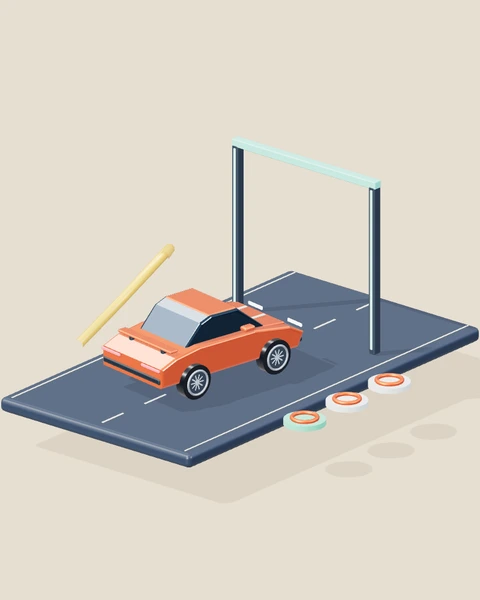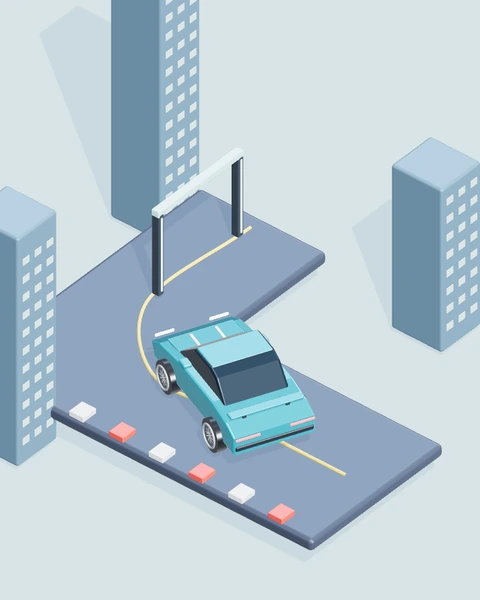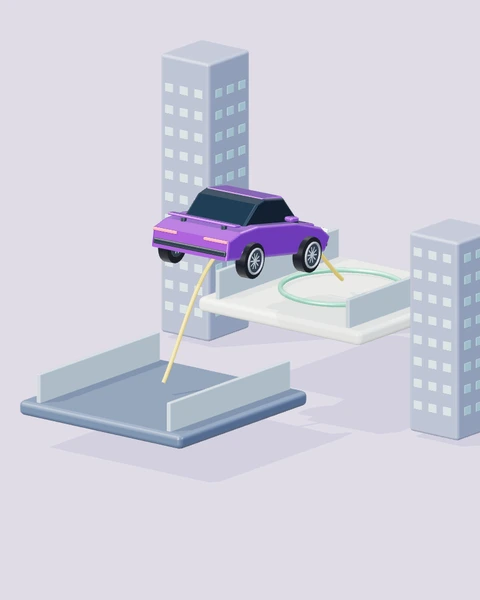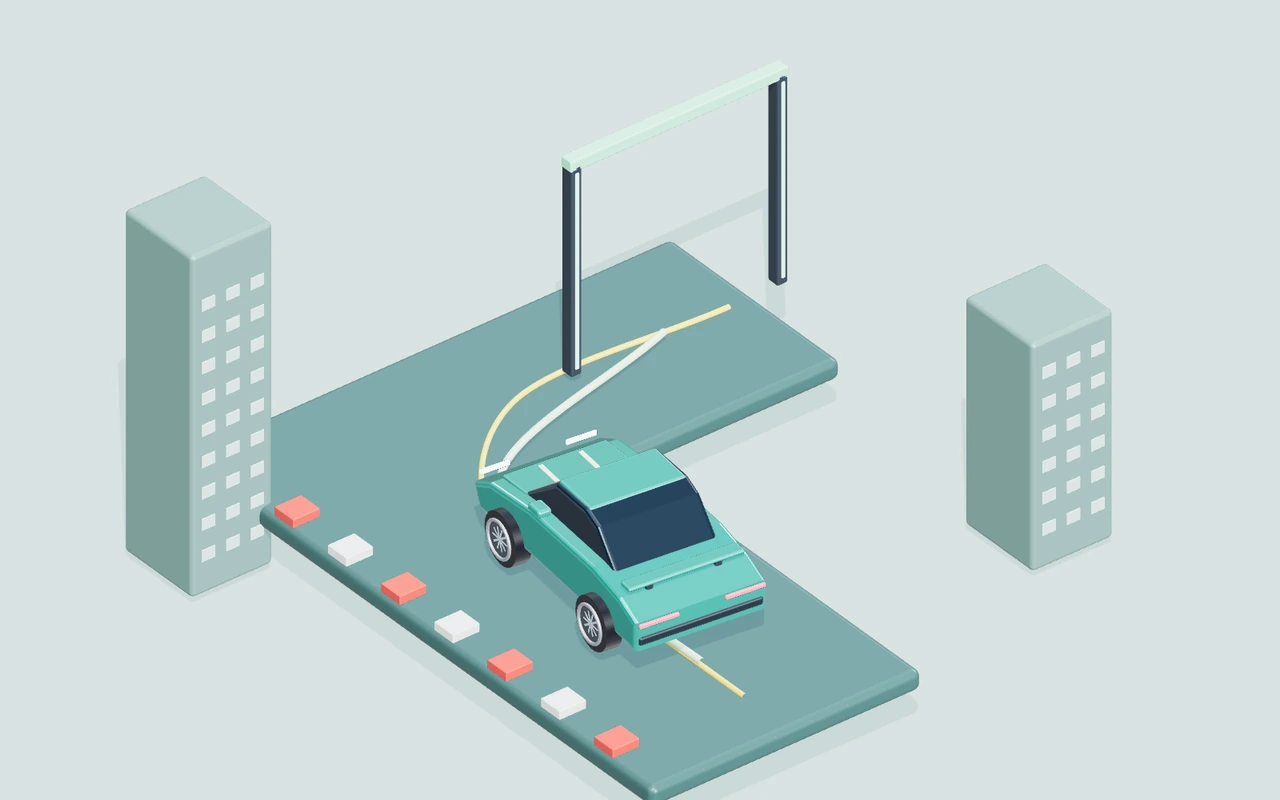
Pursuit Breakout does not finish just because you are moving away from an opponent. It needs three unique access beacons and a final exit. The small city’s four solid buildings change which routes are available to you and the three pursuing cars. A plan that includes where to go after collection is more useful than a fast approach that stops in a crowded corner.
Choose collection order before speed
The three beacons can be collected in any order. A broad outer loop can gather them without repeatedly cutting through the building blocks. You can reverse that direction or change the order when a pursuer occupies an awkward opening.
A collected beacon disappears, so its ring does not need to be visited again. Keep the access counter and remaining markers in view. The exit remains incomplete until all three are collected; an early arrival at it gives no substitute access.
Use a building as a route change
The pursuers regularly update paths around blocked building cells. Moving around a corner can require them to take a different street, opening separation. They also have physical bodies, so a building corner blocks your own car if you steer too late.
Brake before a tight change and restore throttle once the outgoing corridor is clear. The chase is programmed routing in a small arena, not human prediction or an unrestricted city system. Choose the visible open road rather than relying on scenery beyond the play surface.
Reserve boost for a line with room
Boost builds acceleration while spending its regenerating reserve. A short open-street burst can help you escape a closing pursuit or cross a collection region. A burst into a blocked corner can instead leave you stopped beside the pursuers.
The three shields are consumed by meaningful pursuit impacts, with a brief interval protecting against instantaneous repeated drain. There are no repair items. After contact, create separation and reconsider the route instead of treating the remaining shields as permission to repeat the same collision.
Finish the prerequisite before the escape
Once ACCESS reaches three, head toward the exit with a useful outgoing street. An arbitrary further beacon circuit is unnecessary. You do not need to park there for a cargo-style hold, but must enter its area while the attempt still has shields and time.
Recovery returns the car to its start at a time cost and preserves access and shield state. Restart restores the entire opening. Use the right retry for the problem: a poor heading may need recovery, while a nearly exhausted shield count may be a reason to rehearse a fresh route.
Decisions at a glance
| Route decision | Check before committing |
|---|---|
| First beacon | An open approach and outgoing street |
| Building corner | Enough room to brake and turn |
| Boost burst | Clear travel beyond the current target |
| Exit visit | All three unique beacons collected |
YOUR NEXT SESSION
Put it into practice
Collect one beacon and drive away without boost. Repeat the same opening and extend toward a second. If a corner stops the car, make the next attempt’s steering earlier rather than faster. Once collection is consistent, keep a short boost for the final exit approach.
Play Pursuit BreakoutFrequently asked questions
Must I collect the beacons in a fixed order?+
No. Any order is accepted. Each marker disappears after collection, and the access counter tracks the three unique beacons. Choose a route that suits the current pursuit positions and leaves an escape path.
Why does reaching EXIT not finish the attempt?+
The exit requires all three access beacons first. An early visit does not satisfy the mission. Gather the remaining visible markers, then return to the exit while shields and time remain.
Do pursuers drive through buildings?+
Their navigation routes around blocked building areas, and the buildings have physical collision bodies. The pursuit uses a small periodically updated grid route rather than human strategy or an unrestricted open-world traffic system.
Final words
Escape requires access first. A useful route creates room after each collection, not only speed before it.
Choose one idea from this article, try it in your next run, and notice what changes. A calmer, repeatable attempt gives you something useful to build on.