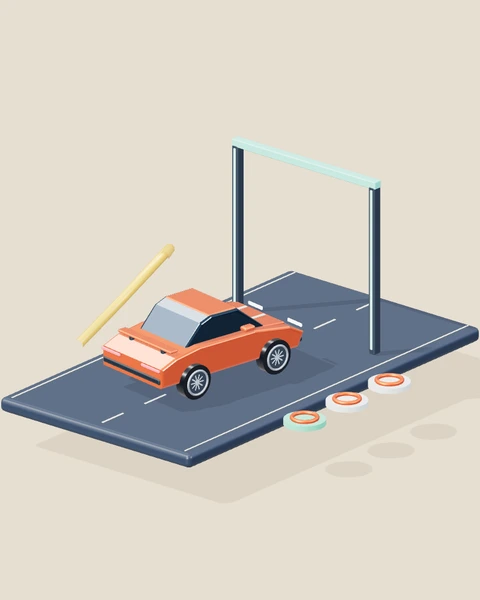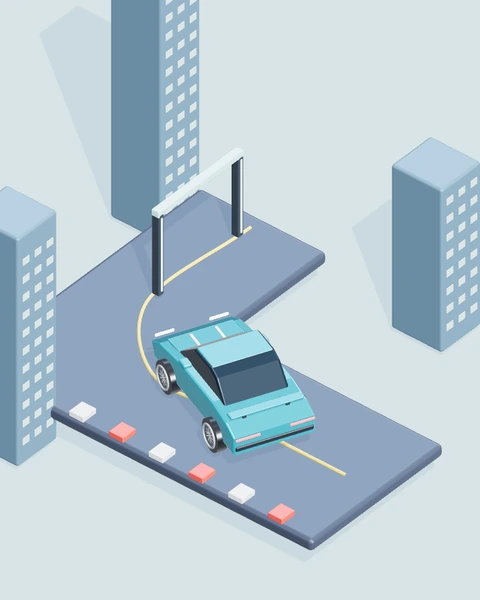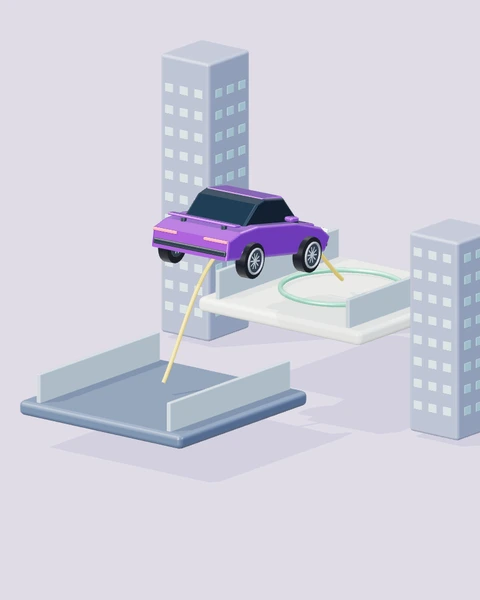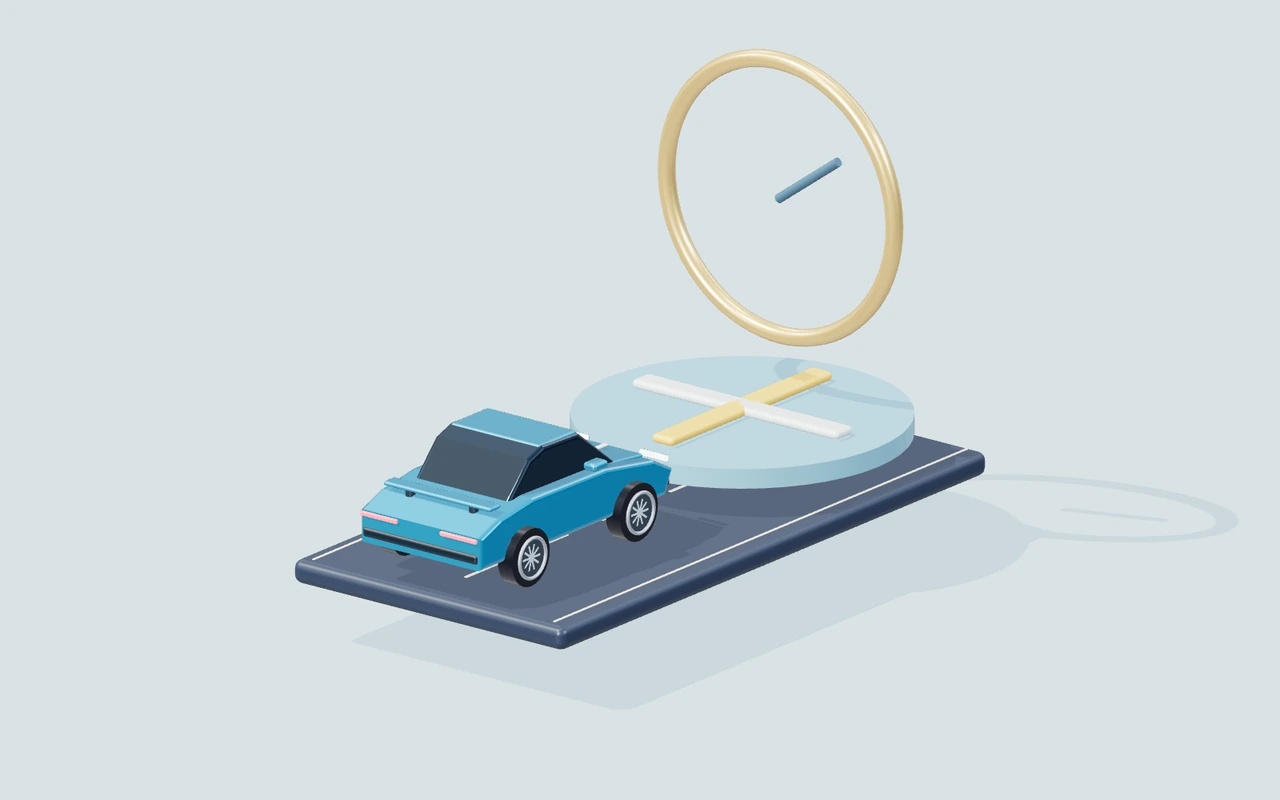
Timing games ask you to make a decision about an object that will keep moving after your input begins. Kinetic Crossing uses sliding platforms beneath an airborne car. Pendulum Run uses swinging danger above a continuous bridge. Both reward observation, but one needs a landing at a future location and the other needs enough time to move through an opening.
Observe position and direction
Watch one full movement cycle before your first commitment. Identify the extremes, the reversal and the faster central passage. A platform or ball at the edge may be about to move inward; its position alone does not tell you whether the next second is useful.
Choose a repeatable visual cue. For a platform, that might be travelling toward your intended landing line. For a wrecking ball, it might be moving away from the bridge centre. Use the cue to compare attempts, rather than deciding that every miss needs a faster accelerator.
Include your preparation time
The car does not arrive when you press a button. It needs time to accelerate, charge if jumping and travel to the hazard or destination. Waiting until a swing reaches its outer extreme and then accelerating from rest can make you arrive after the opening has closed.
In Kinetic Crossing, a high charge creates a longer flight during which the surface keeps sliding. Aim for where it will be when the wheels descend. A larger charge can be worse if it delays touchdown beyond the useful part of the platform’s cycle.
Separate a miss from an unstable landing
If the moving surface is nowhere beneath the car at descent, investigate arrival timing or lateral aim. If the car reaches it and rolls off immediately, investigate speed after contact and the limited preparation area.
Pendulum contact is different: the ball can physically push the car toward an edge. A glancing collision may leave support, while a harder one may lead to a fall. The cleared counter describes route passage, and recovery to the start can place hazards ahead again. It is not a set of permanently unlocked stages.
Waiting needs its own safe place
Stop where the current roof or bridge still supports the car and where the moving hazard cannot hit it. Waiting directly under a wrecking ball is not safe merely because you have released throttle. A sliding platform also continues moving while you prepare the next jump.
Observe, choose a window and commit with a clear purpose. After contact or landing, prepare again instead of blindly carrying the same timing into the next phase. The different platforms and pendulums have different phases, so a successful opening does not guarantee every later obstacle is synchronised with it.
Decisions at a glance
| Observation | Possible next change |
|---|---|
| Target crosses before touchdown | Shorten flight or delay departure |
| Target moves away as car descends | Choose another part of its cycle |
| Landing counts but car rolls off | Reduce arrival movement and settle |
| Swing reaches car during acceleration | Start from another safe distance or cue |
YOUR NEXT SESSION
Put it into practice
Watch the first sliding platform without launching. Choose a cue, make a measured jump and note its position at touchdown. Repeat once with the same speed and charge but a different departure time. Then try the same observation routine before Pendulum Run’s first swing.
Play Kinetic CrossingFrequently asked questions
Does touching any platform advance progress?+
Only the next required platform advances the sequence, and the check needs grounded wheel contact with its body. Flying across a marker or skipping ahead does not satisfy an earlier landing.
Why does a successful-looking line fail later?+
The target slides while you charge and fly. Its position at touchdown can differ substantially from its position at departure. Watch its direction of travel and aim for the expected arrival position.
Can I wait for a better platform position?+
Yes. The clock keeps running, but no rule forces immediate jumps. Waiting near a reversal can create a wider usable window. Stay alert to the edges of the surface supporting your own car.
Final words
A timing correction changes when you arrive. Diagnose that separately from launch power, steering and post-contact control.
Choose one idea from this article, try it in your next run, and notice what changes. A calmer, repeatable attempt gives you something useful to build on.