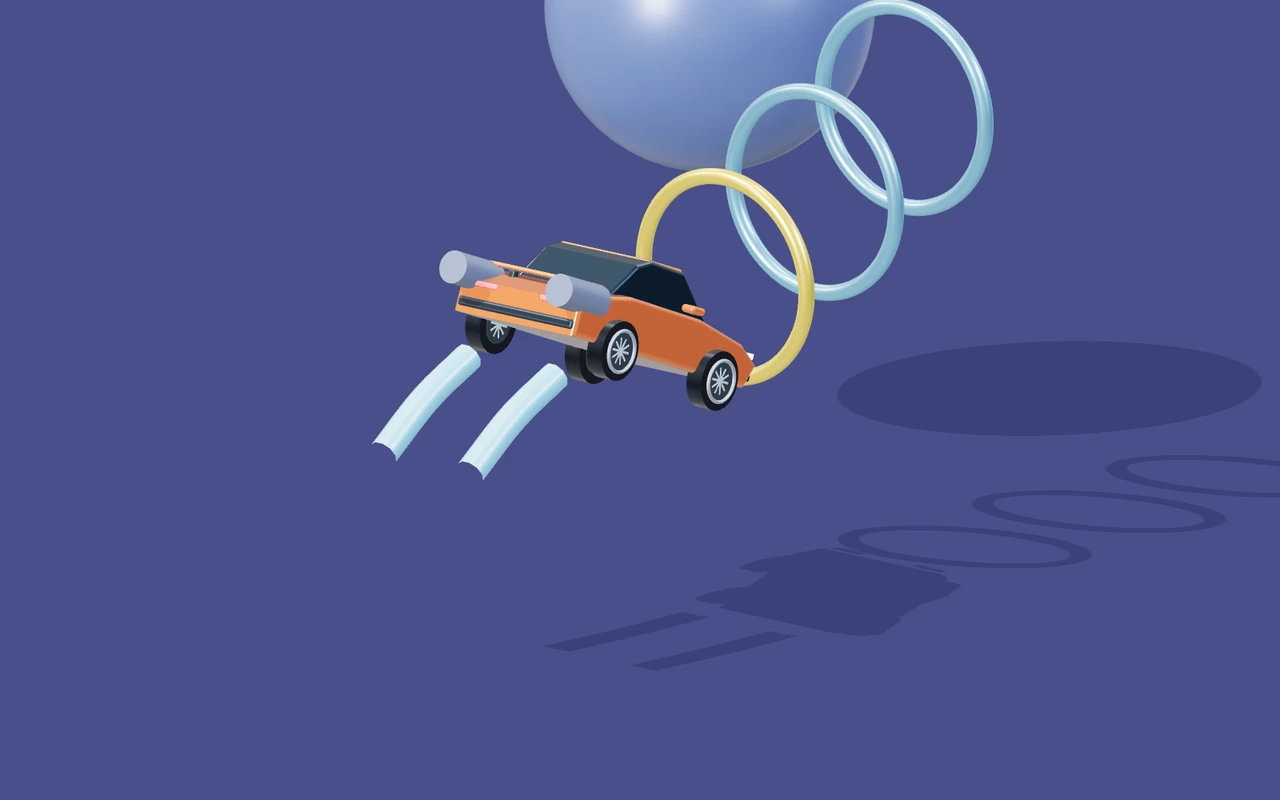
Rocket Rings looks like a car game until the road stops being the main reference. Forward flight continues while your decisions shift to pitch, yaw, lift and the next ordered ring. A player who treats every visible miss as a reason for a large correction can spend fuel without creating a clearer approach. The useful routine is to choose the next target early, make a measured change and watch what that change does before adding another. This article focuses on small airborne decisions and fuel awareness, so the car’s path becomes something you can interpret instead of a succession of urgent button presses.
Read the active ring: Order is part of the mission
The ring you can see is not always the one that should guide the current correction. The mission uses an ordered sequence, so look at progress and the next target before deciding on a line. Trying to reach a later ring while an earlier one remains incomplete changes the visible flight without advancing the intended task.
Use the active ring’s height and sideways position as two separate references. First decide which difference is most immediate, then choose a modest pitch or yaw adjustment. The camera follows the flight rather than supplying a flat navigation chart, so a target that grows quickly can become harder to correct at the final moment. Read it while there is still room. A completed ring gives the next part of the route a clearer question, but you still need to identify that question before continuing the previous input.
Separate height from direction: Avoid fixing everything together
A ring above and to one side invites several inputs at once. If you hold a large height change, turn strongly and add lift together, the resulting motion can be difficult to explain. You may pass nearer the target without knowing which action created the improvement or which one caused an overshoot.
During practice, decide whether height or sideways alignment needs attention first. Make a small correction, release and observe the approach. Add another action only when the earlier one has a readable effect. This does not mean flight must become a rigid sequence of isolated buttons forever. It means that learning the response benefits from smaller comparisons. Once a familiar approach is repeatable, you can combine inputs with a clearer expectation of how each changes the car’s path toward the ordered target.
Use lift deliberately: A burst needs a reason
Lift is useful when it answers a visible height problem. Holding it simply because the car is airborne can change the flight and consume a limited resource without improving alignment. Read the target and fuel before adding an extra upward action, especially when the next ring is already near the current flight path.
Try a short burst and look at the result. If the car rises into a more useful approach, preserve that preparation and release the action instead of automatically extending it. If height becomes comfortable but the ring passes to one side, return attention to yaw. Fuel awareness should make the decisions more selective, not turn every moment into anxious checking of the meter. Low changes relevant consumption and forgiveness, creating more room to learn which correction the route actually needs before testing a tighter condition.
Recover a readable approach: Keep the next attempt specific
A missed ring or a failed flight can make it tempting to restart immediately and use more input everywhere. Instead, remember the last point at which the approach made sense. Was the target read too late, was one correction held too long or was fuel spent on lift without a clear height need?
Use the player’s recovery controls to return to a safe flight condition when needed, and read the next target again before moving. Completed objectives remain useful progress within the current challenge. A fresh run is the right choice when you want the original sequence and opening, rather than a recovered comparison. On the next attempt, make one chosen correction earlier or smaller. The goal is not to promise a perfect flight from one adjustment; it is to turn the car’s movement into evidence you can use at the following ring.
Height is corrected but the ring passes beside the car
Your car reaches a comfortable height for the active ring, yet its path remains to one side. You keep adding lift because the previous upward action produced a visible change and feels like the most responsive control. Release unnecessary lift and identify the sideways difference. Make a measured yaw correction while preserving the height preparation that already helped. Give the turn time to change the approach before adding another large input.
Watch whether the ring moves into a more useful forward line without losing the height you prepared. The important evidence is a clearer alignment, not simply more movement from the control that felt easiest to notice. Keep the useful height decision and refine direction separately. If the target is already too close for a readable correction, recover or begin a new attempt and identify the sideways difference earlier in the approach.
The car rises above a previously reachable target
A lift burst brings the flight toward the ring, but you continue holding the action as the target grows in the camera. The car moves beyond the useful height and the next correction becomes a hurried downward reaction. Repeat the approach with a shorter burst. Release once the change has a readable effect, then observe the remaining height difference. Keep the earlier line similar so the burst duration is the main comparison.
Notice whether the target remains within a manageable approach after release. A shorter action that leaves room for another small decision is more useful than a dramatic change that immediately needs to be cancelled. Use the improved burst as a reference for the next flight. Do not add a stronger opposite correction before understanding when the original upward action stopped helping the approach.
Fuel falls while the line remains unclear
You combine lift and large direction changes throughout the flight. Fuel decreases, but the active ring still appears in a different place every time you glance at it, making the next action difficult to choose. Begin a calmer attempt and identify the active ring before adding extra lift. Choose the most immediate alignment problem, make one measured correction and release long enough to read what changed.
Watch both the path and the meter. Selective use of lift should connect fuel expenditure with a visible purpose, rather than treating resource loss as an unavoidable feature of every second in the air. Keep difficulty fixed while comparing the decisions. If the route remains unfamiliar, practise on Low and use its calmer resource condition to learn the corrections before demanding a tighter fuel allowance.
A later ring distracts from the active target
You see another ring farther along the route and turn toward it because it appears easier to reach. The flight changes, but progress does not advance as expected because the current ordered target remains incomplete. Recheck the target sequence and return attention to the active ring. Use the visible progress and next-target guidance to decide which height and sideways references should control this approach.
Observe whether the correction now advances the intended task. A path toward an attractive distant object is not the same as a completed ordered ring in the current mission. After passing the active target, identify the next one before continuing the previous input. Treat each completion as a new alignment question rather than an excuse to hold the same correction indefinitely.
Keep the experiment useful: Controls, recovery and setup
Before trying the exercise, confirm the current mission in Rocket Rings: Fly a rocket-powered car through four elevated rings before its fuel runs out. The player’s controls table is the reference for the actual actions available. W / S means pitch up or down. A / D means yaw left or right. Space / LIFT means use extra lift and spend fuel. Start and focus the canvas before using the keyboard. On a phone, use the labelled touch actions under the scene. Change one input at a time while learning the response; unfamiliar finger placement can otherwise look like an unexplained change in the game’s handling.
Difficulty and Graphics answer different questions. Low creates a calmer learning condition by changing the relevant mission settings; Medium removes some assistance; High uses the base challenge. Changing difficulty begins a fresh run, so choose it before comparing attempts. Graphics changes the rendered scene: Low reduces resolution and disables sunlight shadows, Medium adds shadows, and High increases sharpness, shadow detail and material reflections. A clearer picture can help you read the scene, but it does not replace the movement decision described in this article. Keep difficulty fixed while testing a technique.
Three lives give a run room to continue after detected failure. Read the reason on the Continue panel and choose one correction before recovering. Continue restores a safe position while completed mission objectives remain where the mode supports them. Reset vehicle can recover an awkward position without refreshing the page or spending a life. Recovery does not mean a completely fresh mission: choose Start a new run when you want the original opening. A paused panel stops the active simulation, and a voluntary reset adds no time penalty.
Use the pause control if you need to read, change hand position or look away. Sound and background music have separate controls and begin after an interaction; they are optional feedback rather than prerequisites for understanding the visible target. Fullscreen gives the scene more room, with an expanded-player fallback where the native API is unavailable. If your experiment is about steering or timing, keep the browser, input arrangement and graphics profile consistent. A score from one isolated attempt tells you less than a decision that leaves the vehicle well positioned in several attempts.
Decisions at a glance
| Situation | Useful action | Evidence to watch |
|---|---|---|
| Height is corrected but the ring passes beside the car | Release unnecessary lift and identify the sideways difference. Make a measured yaw correction while preserving the height preparation that already helped. Give the turn time to change the approach before adding another large input. | Watch whether the ring moves into a more useful forward line without losing the height you prepared. The important evidence is a clearer alignment, not simply more movement from the control that felt easiest to notice. |
| The car rises above a previously reachable target | Repeat the approach with a shorter burst. Release once the change has a readable effect, then observe the remaining height difference. Keep the earlier line similar so the burst duration is the main comparison. | Notice whether the target remains within a manageable approach after release. A shorter action that leaves room for another small decision is more useful than a dramatic change that immediately needs to be cancelled. |
| Fuel falls while the line remains unclear | Begin a calmer attempt and identify the active ring before adding extra lift. Choose the most immediate alignment problem, make one measured correction and release long enough to read what changed. | Watch both the path and the meter. Selective use of lift should connect fuel expenditure with a visible purpose, rather than treating resource loss as an unavoidable feature of every second in the air. |
| A later ring distracts from the active target | Recheck the target sequence and return attention to the active ring. Use the visible progress and next-target guidance to decide which height and sideways references should control this approach. | Observe whether the correction now advances the intended task. A path toward an attractive distant object is not the same as a completed ordered ring in the current mission. |
YOUR NEXT SESSION
Put it into practice
Choose the active ring and name its height and sideways differences before correcting. Make one small change, release and observe the path. Add lift only when the target gives it a clear purpose. Compare a familiar approach with a shorter or earlier correction on the next attempt, keeping difficulty fixed. After a failure, choose whether checkpoint recovery or a fresh sequence gives the clearer comparison. Finish the exercise able to explain one correction that helped, rather than remembering only how much fuel remained or how dramatic the flight looked.
Play Rocket RingsFrequently asked questions
Does the car stop moving forward while I adjust height?+
Forward powered flight continues. Pitch, yaw and extra lift change the airborne approach rather than acting like ordinary road acceleration and parking controls. Identify the active ring early enough that your correction has time to become readable before reaching it.
Should I hold lift throughout the run?+
Use lift when it answers a height difference. An unnecessary held action can overshoot a useful approach and spend fuel. Try a measured burst, release and watch the result. Preserve a height decision that already works while investigating sideways alignment separately.
Why did flying near another ring not advance progress?+
The mission uses an ordered sequence. The active target is the useful reference for the current approach. Check the progress and next-target guidance rather than choosing whichever visible ring seems nearest or easiest at that instant.
Final words
A useful rocket flight is a chain of readable approaches. Follow the active ring, separate height from direction while learning and spend lift on a visible need. Smaller corrections leave room to interpret the path before the next target becomes urgent.
Choose one idea from this article, try it in your next run, and notice what changes. A calmer, repeatable attempt gives you something useful to build on.