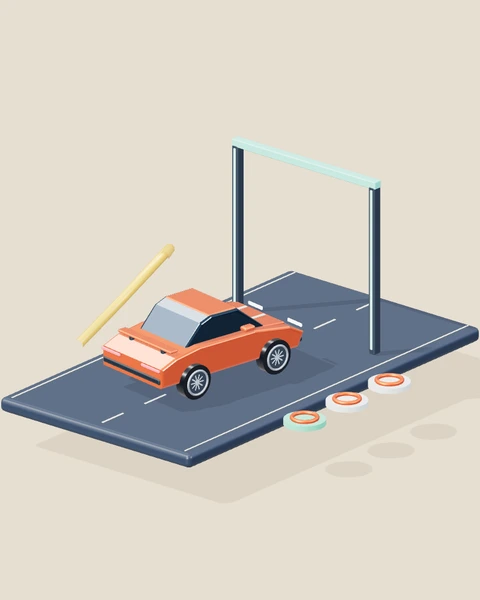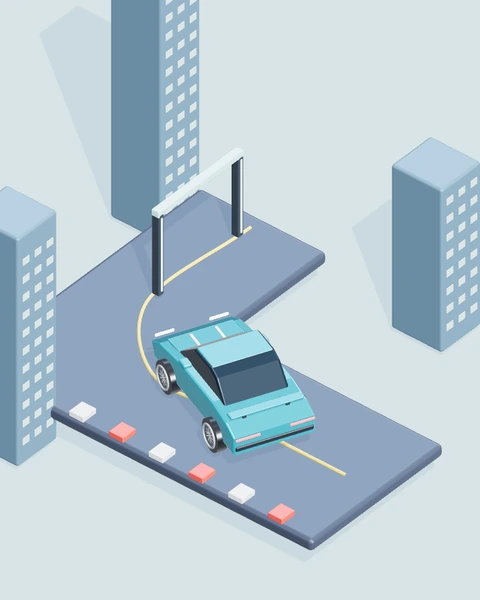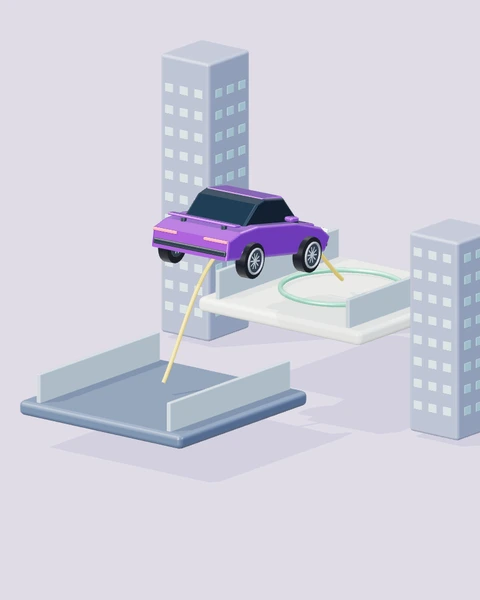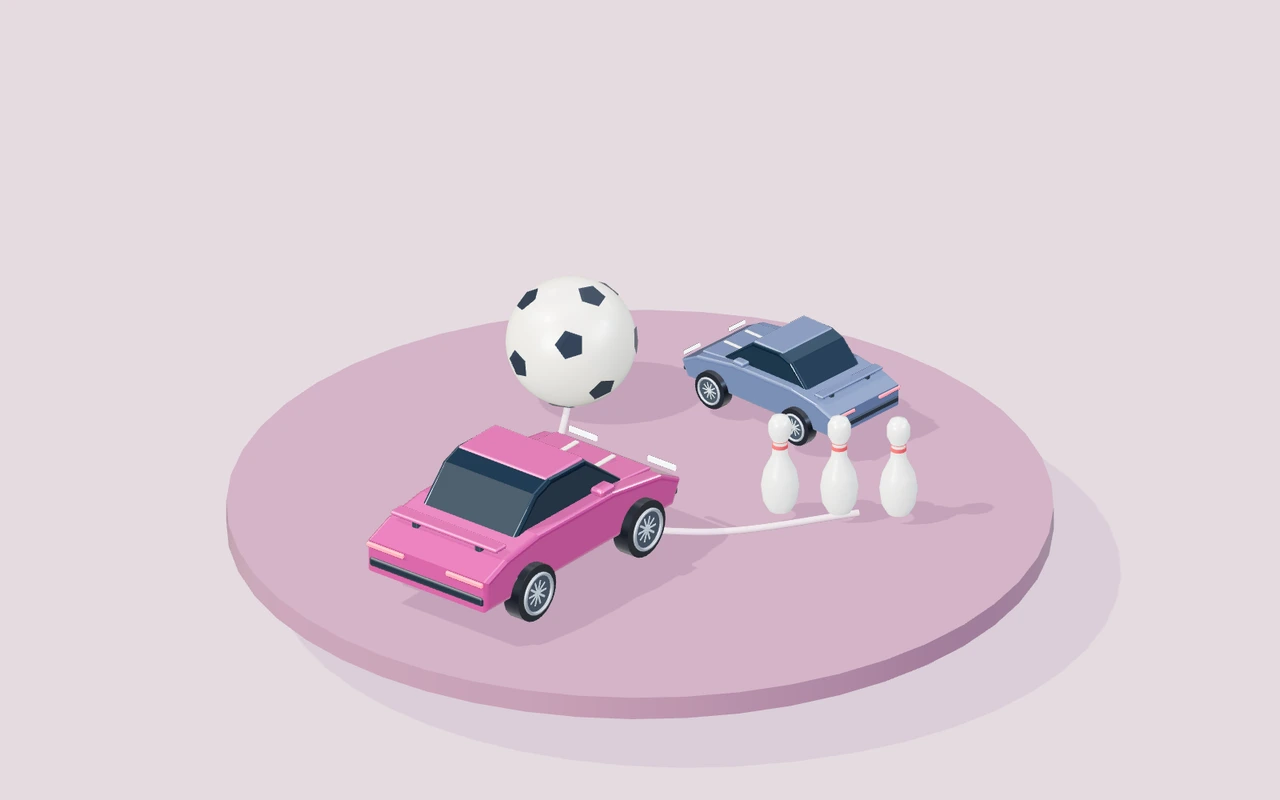
A car striking another object is not one generic mechanic. Turbo Football needs a ball to cross a guarded opening. Arena Knockout needs another car to lose the roof while you stay supported. Stunt Bowling needs a chosen launch to topple ten pins over up to three shots. The contact direction matters in each, but the objective changes what a good impact looks like.
Direct a ball from behind its useful line
Position behind the ball relative to the goal before accelerating. A side contact moves it sideways and can create a new shooting angle, but it can also send it toward a wall. Begin with ordinary throttle so you can see that response.
The goalkeeper follows the ball laterally within its movement range. A central straight push gives it an obvious block. Set a useful side line, then use a short boost near contact if needed. Reposition after the strike rather than continuing to chase alongside the ball.
Leave yourself an exit after a ring-out strike
A rival near the roof edge may be easier to remove than one in the centre. That opportunity becomes a losing move if your own boosted car follows it into the drop. Plan where you can brake or turn after contact.
The arena’s decorative circle is not its physical boundary. The square roof edge removes support, and the opponent must fall before the counter changes. Give a falling rival time to register; following it off the surface does not improve the elimination.
Launch once, then watch the pin chain
Bowling replaces ordinary driving controls with aiming and held power. The car is the launched object, and post-release collisions determine which pins fall. A direct hit on one front pin can start several useful secondary contacts.
Remaining pins persist into later shots. Aim the second or third launch at what is actually upright now. The game does not reproduce regulation frame scoring, a ball-spin menu or post-launch steering. Choose heading and power before release, then use the complete outcome to plan the next shot.
Compare effects instead of input size
More power is useful only if the contact line and exit are useful. A harder central football push can meet the keeper more quickly. A harder arena strike can carry you beyond the edge. A stronger bowling launch can pass a narrow pin group without enough contact.
Keep one variable stable when practising. Use the same approximate approach speed with a new football angle, the same short boost with a safer arena exit or the same charge with a slightly different bowling aim. Note the physical result, then decide which variable actually improved it.
Decisions at a glance
| Game | Useful outcome | Common misleading result |
|---|---|---|
| Turbo Football | Ball crosses inside the goal mouth | Car crosses without the ball |
| Arena Knockout | Rival falls while you retain the roof | Rival leaves only the painted circle |
| Stunt Bowling | Pins tilt or fall | Front contact with rear pins still standing |
YOUR NEXT SESSION
Put it into practice
Try one light football push from behind the ball and one from the side. Then compare a central bowling launch with a slight aiming change at the same charge. In the arena, practise a short contact that leaves a clear route back across open floor before increasing boost.
Play Turbo FootballFrequently asked questions
What counts as a goal?+
The ball must cross the scoring line within the goal width and below the opening height. Driving the car into the goal is insufficient. A high ball over the mouth or a shot outside its sides does not count.
Is the ball attached to the car?+
No. It is a separate physics object. Contact direction and approach speed change its movement, and it can roll away or rebound from walls. Reposition behind it when you want another controlled strike.
How can I reset a trapped ball?+
C resets the ball and spends five seconds on the shared clock. R recovers the car separately without spending a life or adding a time penalty. A complete restart provides a fresh opening while also clearing the current goals.
Final words
Judge an impact by the objective it creates and the position it leaves you in, not just by how dramatic the collision looks.
Choose one idea from this article, try it in your next run, and notice what changes. A calmer, repeatable attempt gives you something useful to build on.