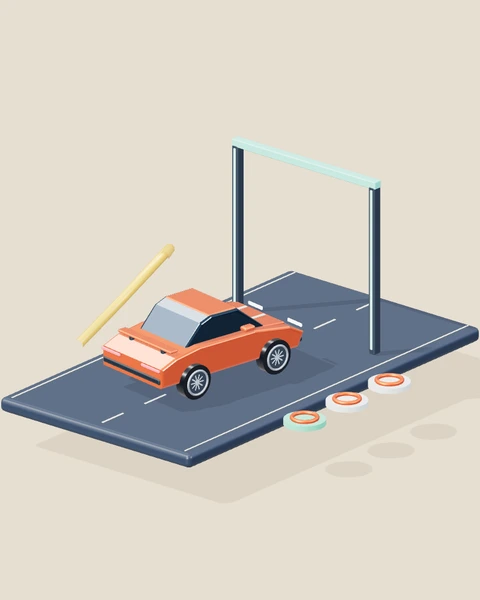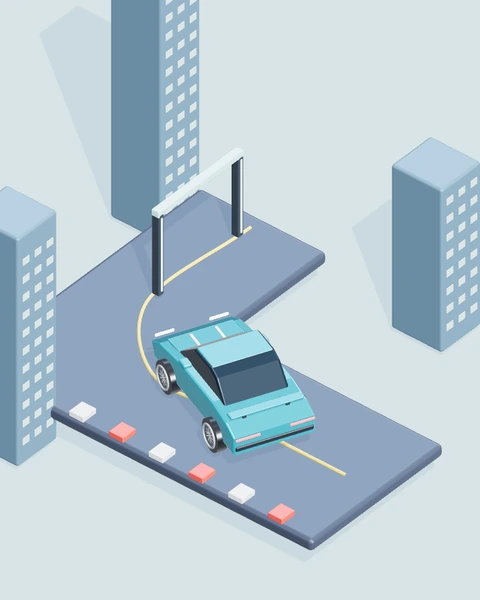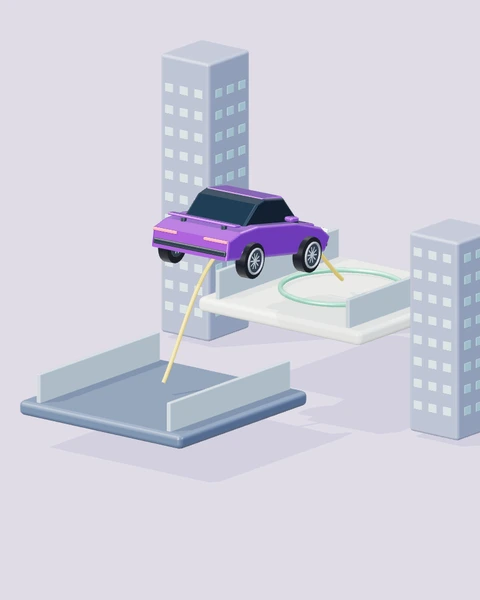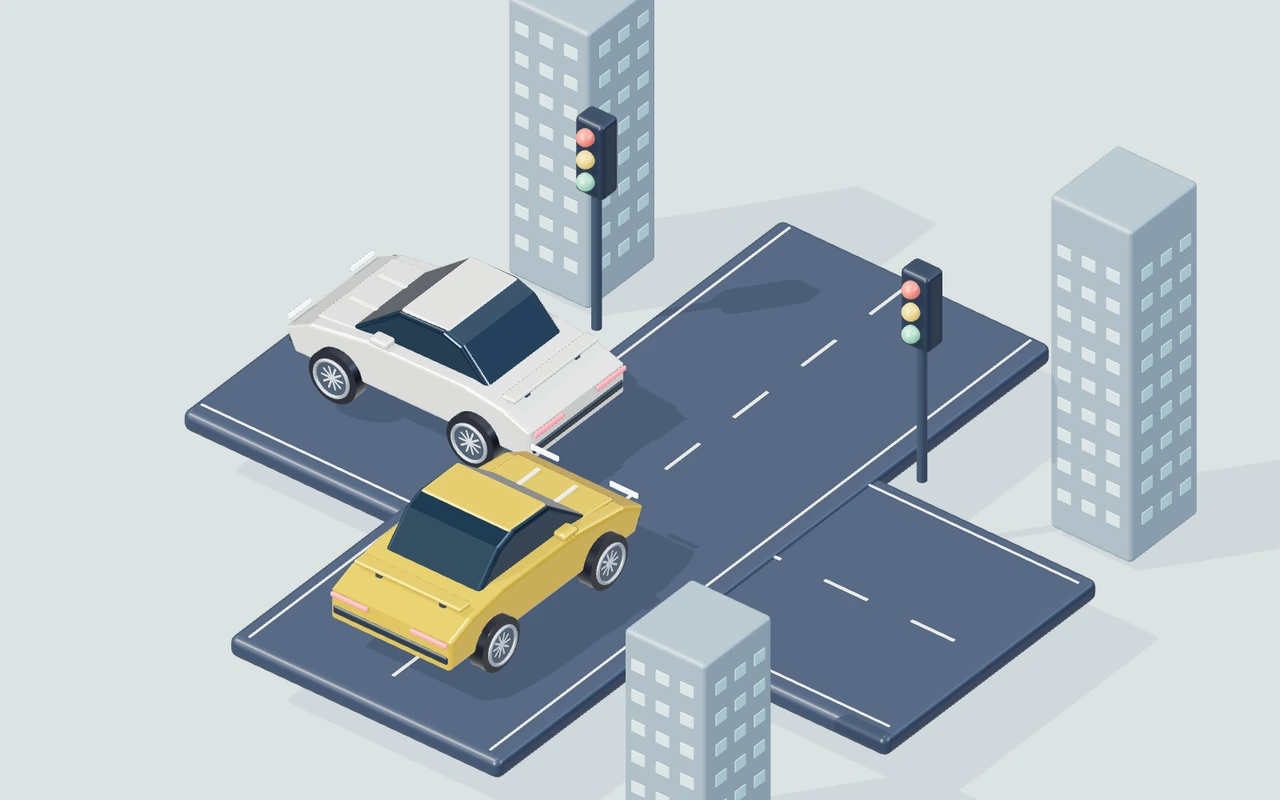
Coastal boost runs, moving traffic passes, ordered courier deliveries and an intersection you control. Four different ways to find a rhythm around cars. Choose Velocity for distance, Gap Runner for complete overtakes, Courier for accurate stops, or Signal Control for queue strategy. Each page explains the actual success condition and provides a practice plan.
Choose the decision you want to improve
Begin with a completed, cautious attempt. Choose one moment that felt awkward and give it a concrete name: entry speed, steering release, a late stop, a gear change or a phase switch. A named decision is easier to practise than a vague promise to drive better. Change one input on the next attempt and keep the others similar.
Count complete passes rather than close approaches
Gap Runner awards a pass after your car moves clearly beyond a traffic vehicle. Matching its speed beside it or arriving close to its bumper is not enough. Use the view ahead to choose a lane that remains open through the pass, then let the distance grow before making another correction. A road that looks empty for a moment can change as you gain on the next vehicle.
Because the other cars continue moving, the point where you pass them depends on your acceleration and recovery. A contact slows your car and costs a shield; that lost momentum can move the next encounter farther down the road. The end of the stage checks both route progress and the required pass count. Arriving at the finish with too few passes does not fulfil the mission. Read the objective before treating this as an unrestricted distance challenge.
Make an early attempt with small lane changes and no effort to squeeze between two close cars. If you cannot pass a group cleanly, reduce speed until a useful gap appears. The score does not require dangerous real-world driving, and this simplified traffic model does not reproduce public-road risk. The guide is about timing a browser-game input against moving 3D objects. For a different traffic challenge, Velocity Coast uses boost and a countdown distance result, while Signal Control moves the decision to the intersection itself.
Turn an observation into a useful comparison
Compare two attempts with the same controls and graphics quality. Look for the action that changed, rather than assuming a higher number always proves a better technique. A clean finish, correctly settled bay or controlled landing is useful evidence even when its total score is modest. Repeat the successful adjustment before adding another one.
Decisions at a glance
| Practice step | What to observe |
|---|---|
| Baseline | Complete an attempt with measured inputs |
| One adjustment | Change the troublesome entry, timing or alignment |
| Repeat | Check whether the same action works twice |
| Move on | Try a related game with a different objective |
YOUR NEXT SESSION
Put it into practice
Finish the ninety-second coastal run without boost first. Next, use one short boost only when the lane ahead is clear. Compare shield survival as well as the distance result.
Play Velocity CoastFrequently asked questions
How do I use boost well?+
Wait for an open lane, hold Space or BOOST briefly, and release before reaching a traffic group. Boost drains its reserve and recovers when unused. Near-miss bonuses can add distance, but a collision removes a shield and speed. A full surviving run is a better first target than a risky opening.
Is acceleration automatic on touch?+
Yes. Touch players steer and activate boost while the car accelerates automatically. Desktop players hold W or the up arrow and use S to brake. This differs from the new road modes, where touch players also have a GAS button. Read the controls for the current game rather than assuming every car uses an identical input scheme.
Where is the finish line?+
There is no fixed-distance finish line in this mode. High uses a ninety-second timer; lower difficulty allows more time. Losing all shields consumes a life and offers Continue with restored protection. The third failed attempt offers Play again. The result is total distance with near-miss bonuses. Choose Gap Runner if you prefer a stage finish and a required overtake count.
Final words
A useful practice session leaves you with one action you can repeat. Read the full game page for exact controls and its success conditions.
Choose one idea from this article, try it in your next run, and notice what changes. A calmer, repeatable attempt gives you something useful to build on.